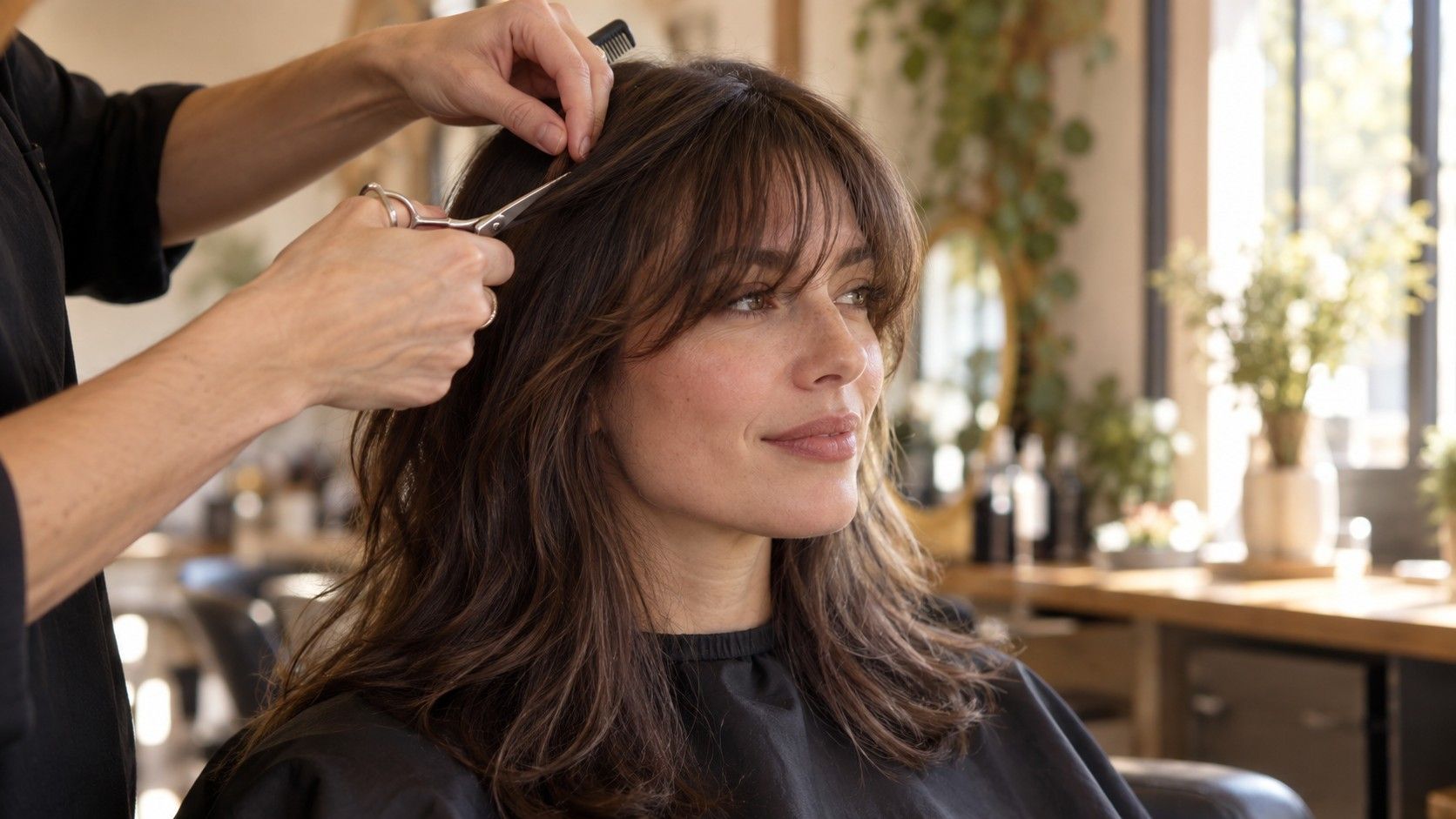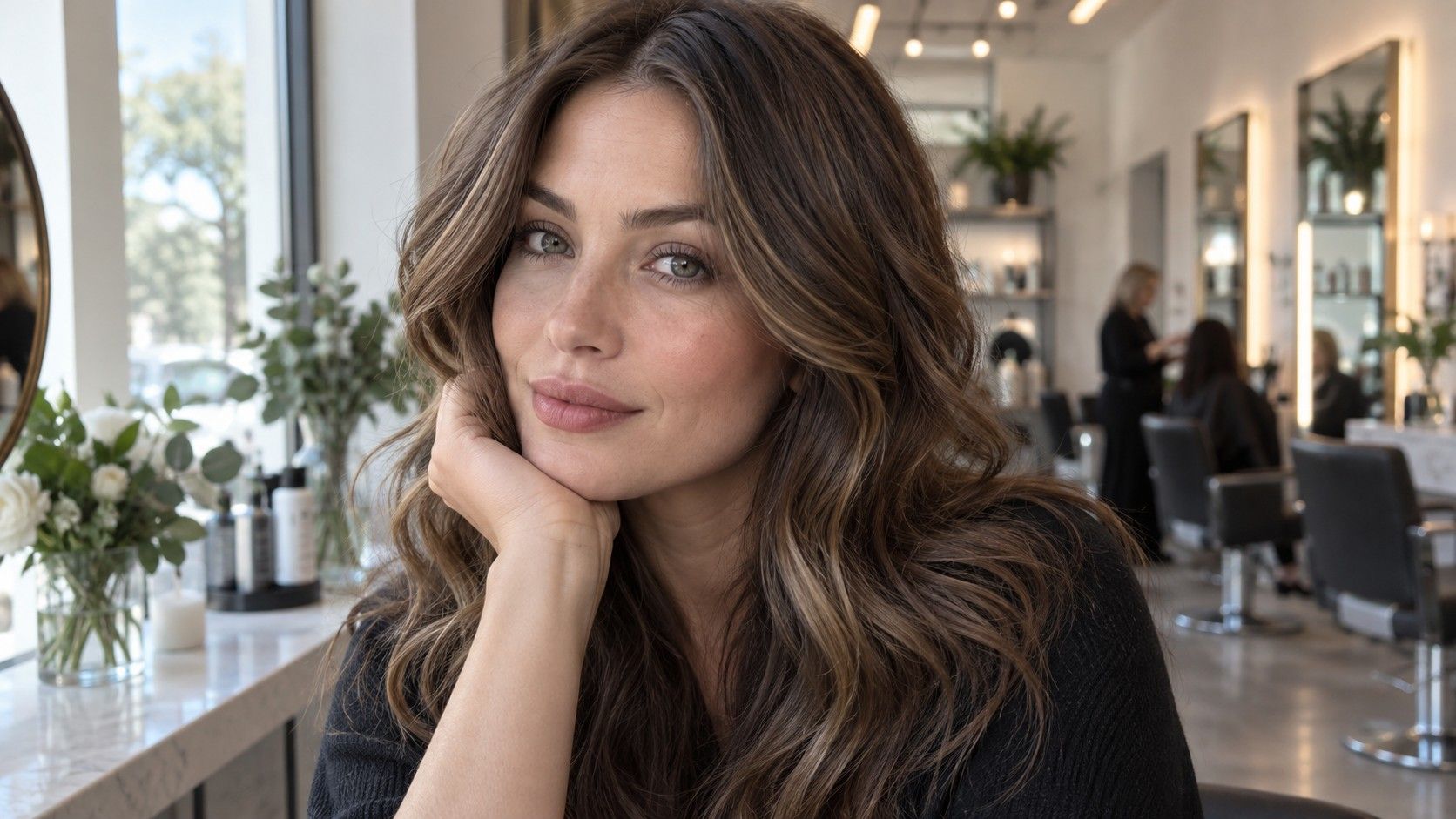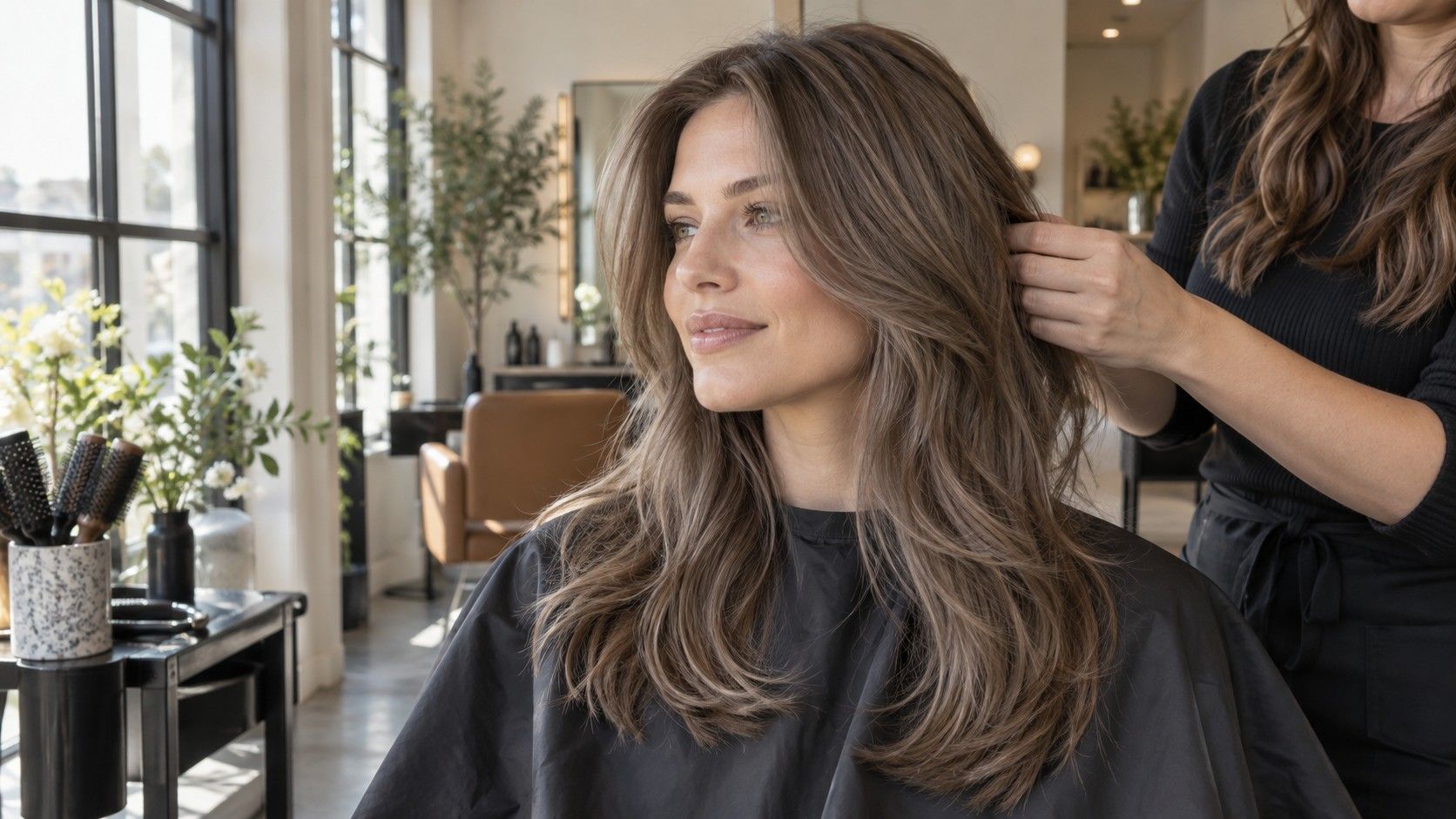
Soft Summer hair colour is less about finding one magic ash shade than avoiding the hard edges that make a naturally blended face disappear. The useful test is simple: does the colour look like it belongs beside grey-blue eyes, muted skin, and softly coloured brows in daylight? If it reads louder than those features before it reads harmonious, it is probably too dark, too warm, or too cleanly bright. The best hair color for Soft Summer usually has a little smoke, a little softness at the root, and enough movement to keep it from looking flat.
Start with contrast, not a swatch name
People often arrive with a screenshot labelled mushroom brown or beige blonde and assume the name settles the decision. It does not. On a Soft Summer, the same formula can look gentle at level seven and severe at level four. Put a black T-shirt and a soft charcoal one near your face in a north-facing window. If charcoal keeps the skin calm while black makes the under-eye area or redness more obvious, that is a clue that your hair should not create black-level contrast either.
This is where Soft Summer differs from Cool Summer. Both can handle cool pigment, but Cool Summer often tolerates a clearer silver tone and a more obvious icy highlight. Soft Summer usually looks better when the grey is mixed with beige, taupe, or a faded rose-brown note. Ask the colourist to judge your natural root, eyebrow depth, and eye rim together; a close-up phone photo with a beauty filter is a poor substitute. The target is a blurred transition, not a dramatic before-and-after.
Choose blonde that looks smoky rather than yellow
A Soft Summer blonde does not need to be dark. A muted pearl, sandy beige, or oatmeal blonde can be very light and still feel convincing, provided the lift is controlled. The common mistake is lifting to a clean yellow base and then trying to cover it with a violet toner. That may look passable on salon day, but the toner washes away and the warmth starts shouting. A colourist should explain how much underlying gold remains before promising a cool result.
For a first appointment, I would choose fine woven highlights or a soft balayage over a solid platinum change. Leave some depth at the crown, keep the brightest pieces away from a thick block around the hairline, and ask for beige-smoke rather than white. In daylight, the contrast between the light pieces and your root should be visible only when the hair moves. If every curl becomes a stripe, the placement is too bold for the palette.
| Direction | What it gives | Watch for |
|---|---|---|
| Smoky beige blonde | Lightness without icy glare | Needs toner if porous ends grab ash |
| Mushroom bronde | A safe bridge from natural brown | Can turn khaki if green ash is overused |
| Soft pearl highlights | Brightness around the face | Keep them fine; broad ribbons look high contrast |
| Oatmeal balayage | Easy grow-out with a diffused root | Lift slowly if previous dye is warm |
Use brunette shades with a grey-beige base
For many people, the best hair colour for Soft Summer is not blonde at all. Taupe brown, cocoa ash, soft mushroom brown, and cool medium chestnut can make the eyes look more defined without asking for constant bleaching. The word ash causes unnecessary anxiety here. It should not mean a dull grey helmet. It means enough cool balance to stop orange or red undertones taking over under indoor lighting.
Bring the colourist a clear goal: medium depth, muted reflect, and no copper cast. A demi-permanent gloss is a sensible way to test this. It fades more gently than permanent dye, which matters if you discover that a level-five brunette feels too deep against your brows. On naturally dark hair, a few lowlights in a taupe direction can be more flattering than trying to make the whole head beige. The root remains believable, and the surface has the soft shadow Soft Summer needs.
Why near-black colour changes the whole balance
Very dark dye can be striking, but it is rarely a low-risk Soft Summer choice. Blue-black and inky espresso create a crisp border around the face. That border can make pale grey eyes stand out for a photograph, then make the skin seem drained in a bathroom mirror five minutes later. The effect is stronger when the brows are naturally soft or when the hairline has fine, lighter regrowth.
If you want more depth, try a cool mocha or a neutral level-five brown first. Look at it outside, in a car mirror, and under warm kitchen bulbs before committing to permanent black. A useful warning sign is needing heavier eyeliner or more saturated lip colour simply to feel visible. That does not mean dark hair is forbidden; it means the colour may be styling the face instead of supporting it. A softened root and faint taupe ribbons are usually a more forgiving compromise.
Build a maintenance plan you will actually keep
Muted colour stays attractive when the maintenance matches your tolerance. Fine beige highlights can go ten to fourteen weeks between lightening appointments, with a gloss around week six or eight if the ends go yellow. A soft brunette may need only a gloss every six to ten weeks, depending on grey coverage and shampoo habits. Permanent colour at every visit is not automatically better; repeated processing often leaves ends porous, and porous ends catch toner darker or cooler than the healthier root.
At the consultation, ask what will fade first, what product the salon expects you to use, and whether your water is likely to pull the tone warm. Purple shampoo is a correction tool, not a daily cleanser; too much can make pale lengths look dusty or violet. Use heat protection, photograph the colour in ordinary daylight after the first wash, and keep notes on what you liked. The most successful Soft Summer colour tends to look quietly right two months later, when the gloss has softened and no one colour stripe is demanding attention.
A final practical detail is the cut. A blunt, one-length style makes every tonal difference easier to see, while soft layers scatter a slightly uneven grow-out more kindly. Do not judge a new toner only under the salon’s bright ring lights. Walk outside, tuck one side behind the ear, and look at the root beside the lengths. When the change feels like a quieter version of your own colouring rather than a separate accessory, the formula is doing its job.