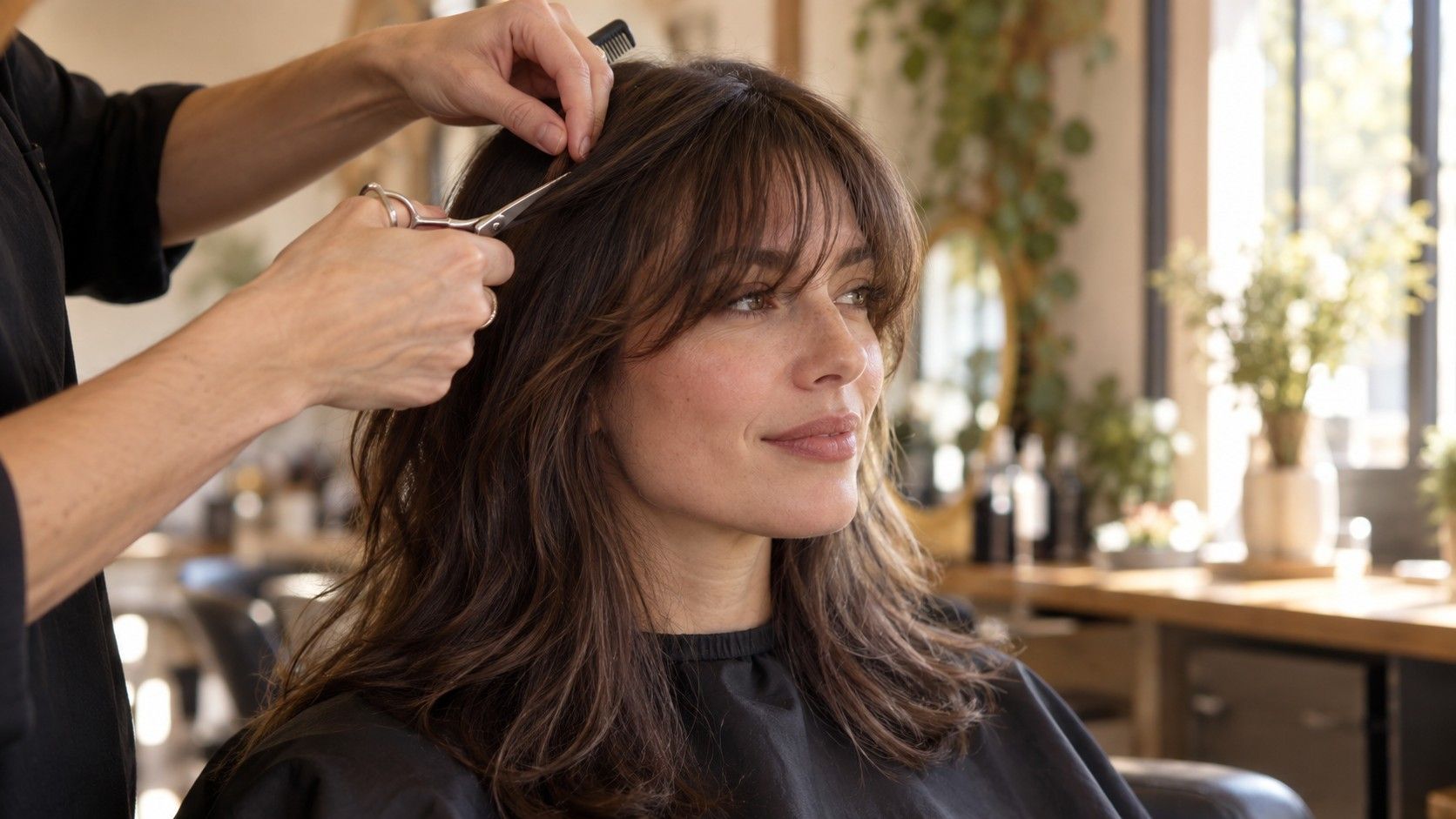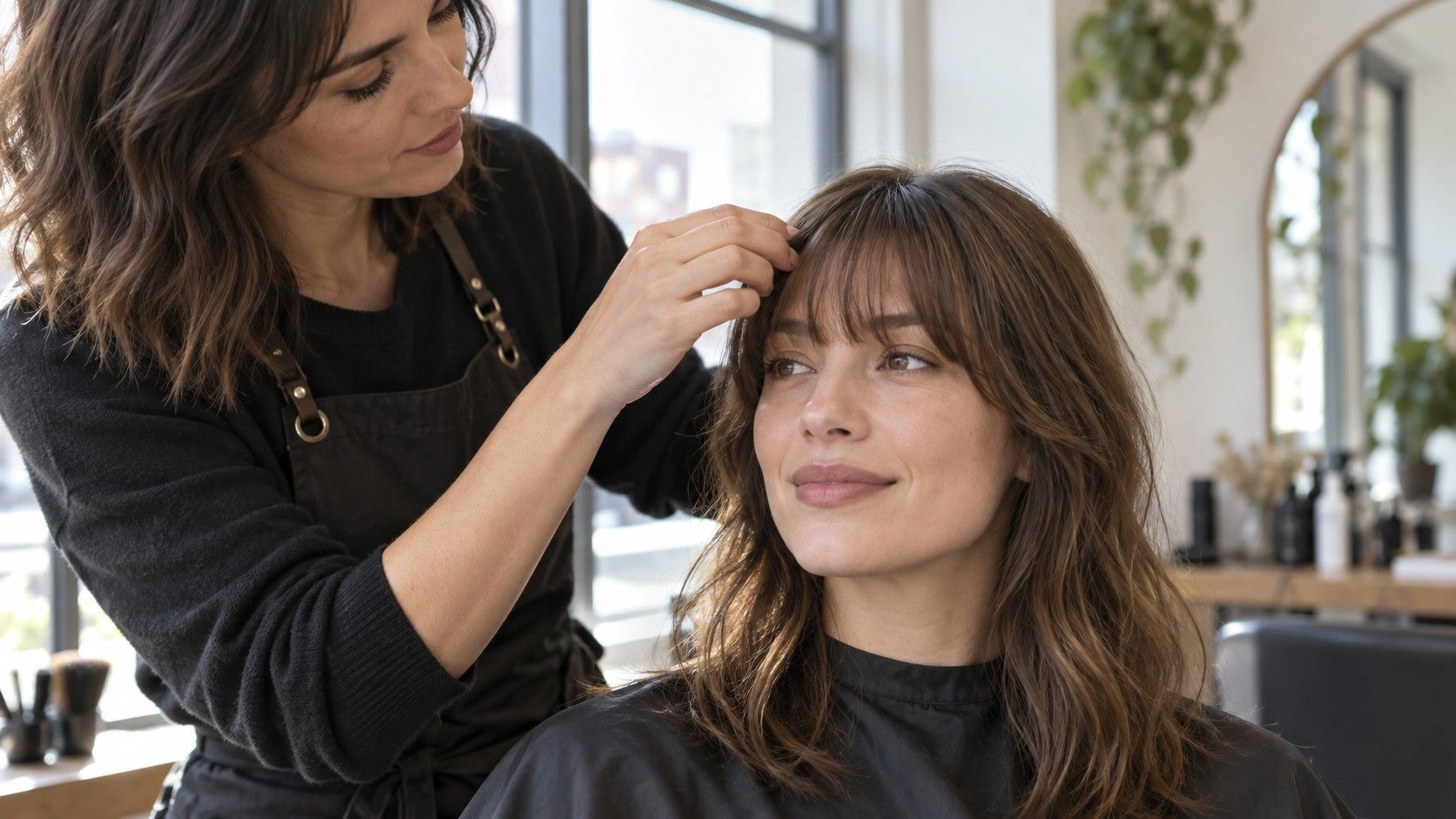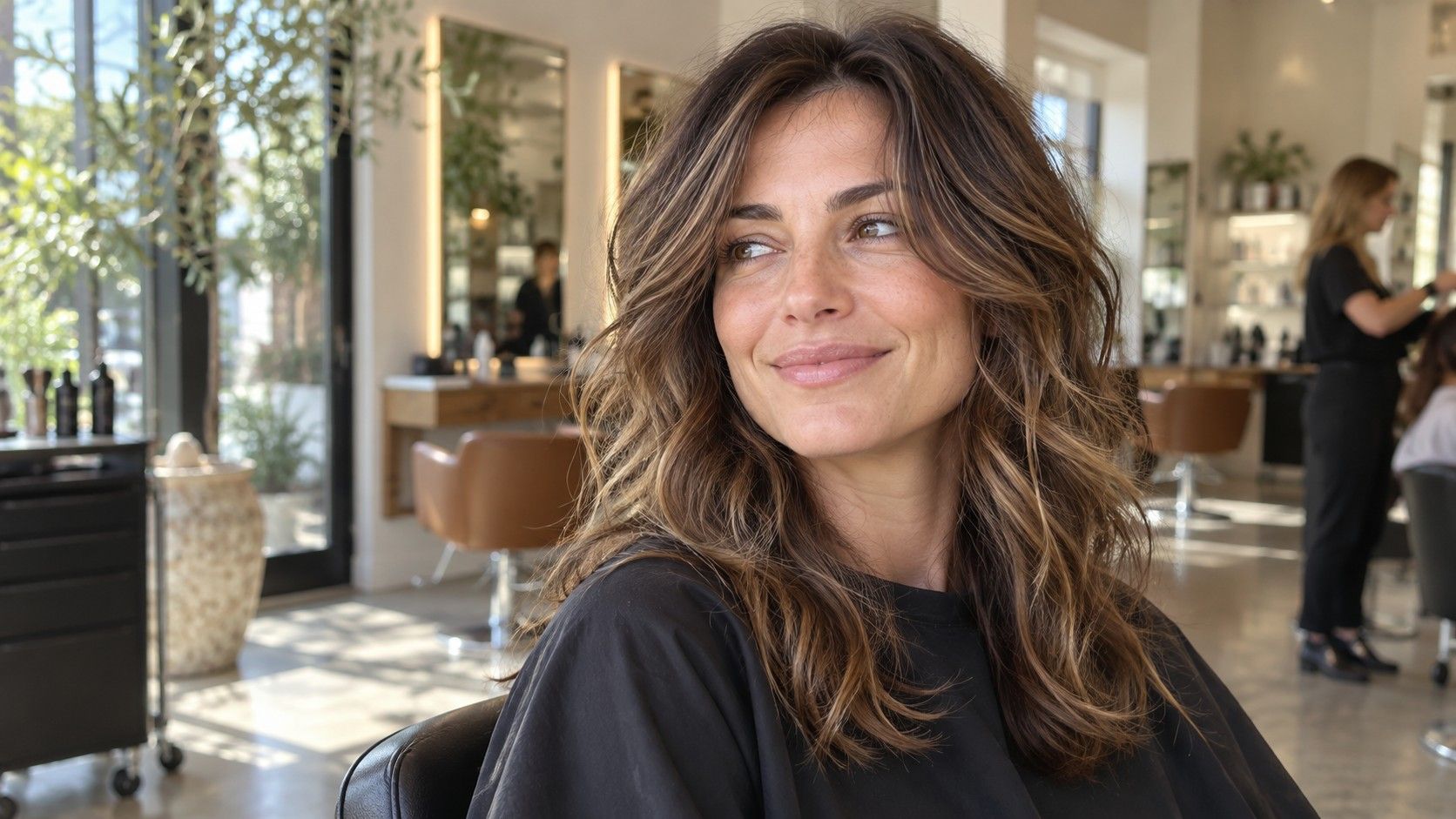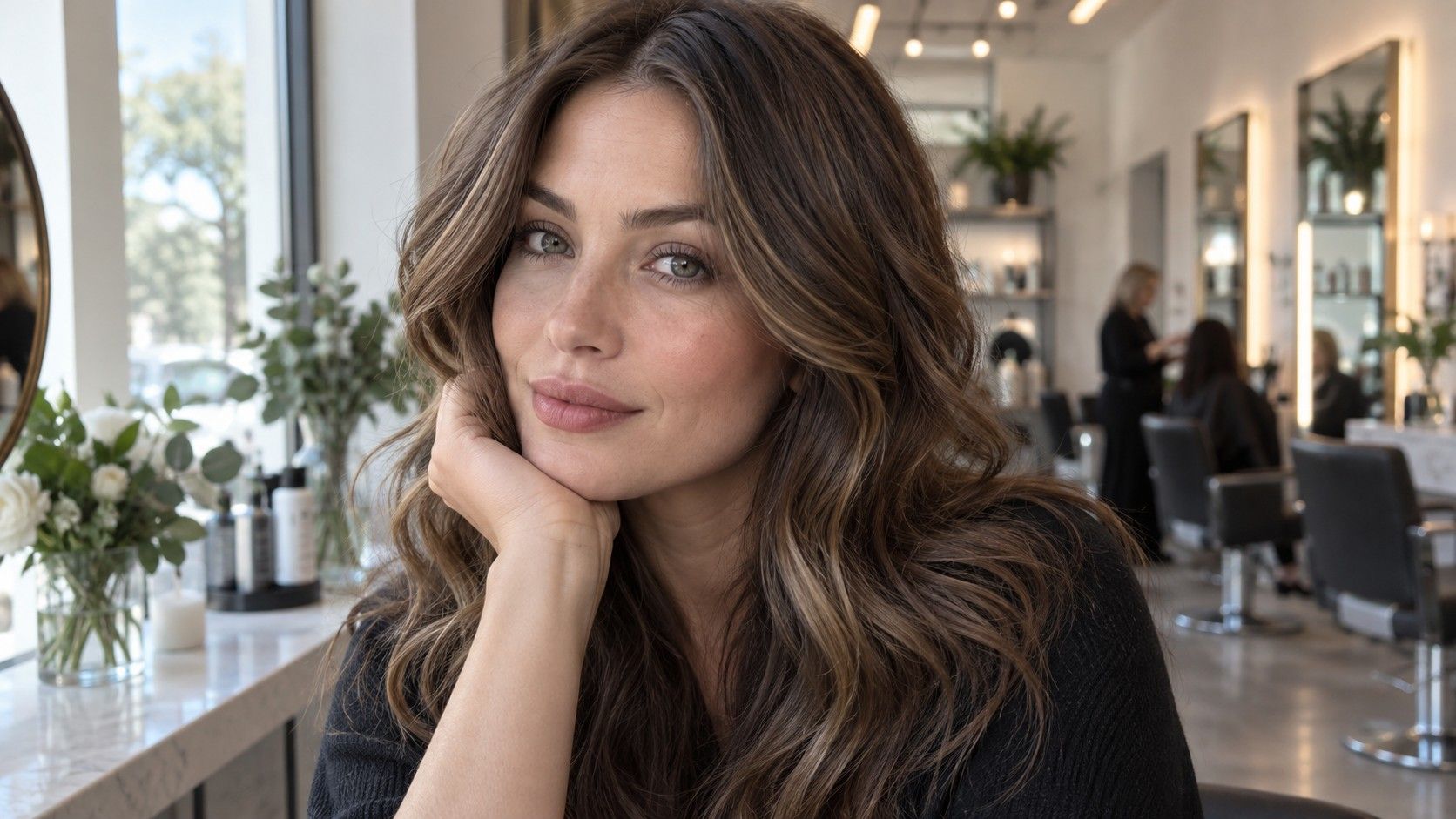
Grey eyes are rarely one fixed colour. In a window they may look silver; under warm restaurant lights they can pull green, blue, or even a faint smoky brown. That is why the best hair color for grey eyes is not a single fashionable shade. It is the shade that gives the eye colour enough contrast without making the skin look tired on an ordinary Tuesday morning, when there is no ring light, no fresh salon blow-dry, and probably no makeup rescue plan.
Start by noticing which way your grey eyes actually shift
Before naming a dye shade, look at your eyes near a north-facing window in daylight. A clean white T-shirt and a warm cream knit are useful makeshift backdrops. If the eyes look icy, steel-blue, or distinctly blue-grey beside white, they usually tolerate ash, mushroom, beige, and cool brunette colours well. If olive, sage, or yellow-green flecks appear next to cream, a little warmth can make them more noticeable.
This check is more useful than trying to classify eye colour from a filtered selfie. Phone cameras often deepen blue and erase subtle green. Take a bare-faced photo in the same spot, then compare it with one taken under bathroom lighting. If your eyes change dramatically between the two, avoid making a high-contrast colour decision from the bathroom mirror alone. Grey eyes respond strongly to surrounding colour, and hair is a very large surrounding colour.
Cool blondes and soft brunettes create the clearest silver effect
For grey eyes that lean blue, cool beige blonde, pearl blonde, muted ash brown, and mushroom brown usually make the iris look more silver. The point is not to make hair look grey as well. It is to keep obvious orange or yellow out of the hair so the eye colour remains the sharpest cool note in the face. A level-seven beige brown with fine cool highlights can do this more gently than a full platinum change.
Cool does not have to mean flat. Ask to see a swatch held against your cheek, not just a labelled ring of extensions across the salon chair. A neutral-cool brunette with a slightly deeper root can look richer than a solid ash brown, especially when natural hair has dimension already. On very fair skin, the deepest blue-black shade can create a striking frame, but it also makes pale under-eye shadows more visible. That trade-off is worth seeing before committing.
Warm shades work when the eyes contain green, not when warmth is used by default
Honey, caramel, soft copper, cinnamon, and warm chestnut can bring green or gold flecks forward in grey eyes. This is often the answer for people whose eyes look grey indoors but turn green outside. A medium chestnut with a few caramel ribbons is usually easier to wear than a blanket copper, because the darker base still gives the iris an edge to play against.
There is a common mistake here: choosing bright gold simply because grey eyes are assumed to need warmth. Strong yellow blonde against cool pink skin can make both the hair and the complexion look separate from each other. If a warm direction appeals, begin with a gloss, face-framing pieces, or a few painted highlights. Watch it for two weeks in daylight and at work. If the warmth makes your eyes livelier rather than your face redder, you have a sound direction.
Choose depth by looking at the whole face, not only the iris
Hair depth matters as much as undertone. Light grey eyes can disappear beside hair that is too close to the skin tone, particularly with very pale blonde and low-contrast brows. A slightly shadowed root or lowlights around the crown can restore shape without turning the result dark. Conversely, very dark hair can make grey eyes look almost transparent if the brows and natural colouring are light.
A useful salon-chair test is to hold medium-brown, dark-brown, and light-blonde swatches beneath the chin while the hair is pulled back. Notice first the skin around the nose and mouth, then the eye colour. The swatch that makes the eyes pop but also makes redness, pigmentation, or tiredness jump forward is not automatically the winner. The better choice is usually the one that gives a clear eye colour and an even-looking complexion at the same time.
| Hair direction | What it can do for grey eyes | Check before choosing it |
|---|---|---|
| Beige or pearl blonde | Emphasises blue-grey and silver tones | Make sure the skin does not look washed out without makeup |
| Mushroom or ash brown | Adds definition while keeping a cool, quiet effect | Ask for dimension so the result does not read flat in indoor light |
| Chestnut with caramel detail | Can reveal green or gold flecks | Keep the warm pieces soft if the skin flushes easily |
| Soft copper or strawberry blonde | Creates deliberate contrast with blue-grey eyes | Try a gloss first; fading and root contrast are more noticeable |
| Deep espresso or blue-black | Gives high drama and a sharp eye frame | Check brow colour, under-eye shadows, and the commitment of regrowth |
Use face-framing colour when you want a change without losing your natural balance
Full colour is not required to test a theory. A few face-framing pieces can show whether a cool or warm family helps your eyes before you recolour the whole head. A cool beige veil around the temples can make blue-grey eyes appear brighter. Fine cinnamon panels can make green flecks visible. Because these pieces sit beside the eyes, they are more influential than a random lighter section at the back.
Placement matters with your haircut. On a blunt bob, a thick money piece can look stripey and dominate delicate grey eyes. On long layered hair, a softer painted frame often blends better. Bring photos that show colour in natural light and say what you like about them: the low-maintenance root, the depth at the crown, or the brightness near the face. A colorist can translate that much more accurately than the phrase “make my eyes pop.”
Bring useful information to the colour appointment
Tell the colorist what is currently on your hair, including home box colour, toning shampoo, henna, or a gloss from months ago. Grey-eye colour ideas become expensive quickly when the appointment starts with correcting an unexpected dark band or warm ends. A photo of your natural regrowth in daylight is more useful than a photo of your hair freshly styled at night, because it tells the colorist what depth will return between visits.
Ask to compare two nearby versions of the plan: for example, neutral beige versus cool beige, or soft chestnut versus copper chestnut. The names on colour charts are inconsistent across brands; the visual difference matters more. If you wear bold lipstick or use warm bronzer most days, mention that too. Makeup influence is real. A hair colour that makes grey eyes look blue with a berry lip may look greener with peach blush and no eye makeup.
Keep the result looking intentional between appointments
The best hair colour for grey eyes can lose its effect when tone shifts. Cool blondes and ash browns often turn brassy from hard water, heat, and repeated washing, while copper and caramel can fade so quietly that people only notice when their eyes no longer look as vivid. Use toning products sparingly: purple shampoo left too long can make porous blonde hair dull, and blue shampoo is not a universal fix for every brunette.
Build maintenance around the change you actually chose. A subtle gloss may need refreshing after several weeks; bright blonde or vivid copper can demand more frequent toning and a clearer plan for regrowth. Photograph the colour by the same window after the salon visit and again before the next one. It sounds mildly obsessive, but it gives you a reliable record of whether the shade still suits your grey eyes after real life, weather, washing, and fading have had their say.