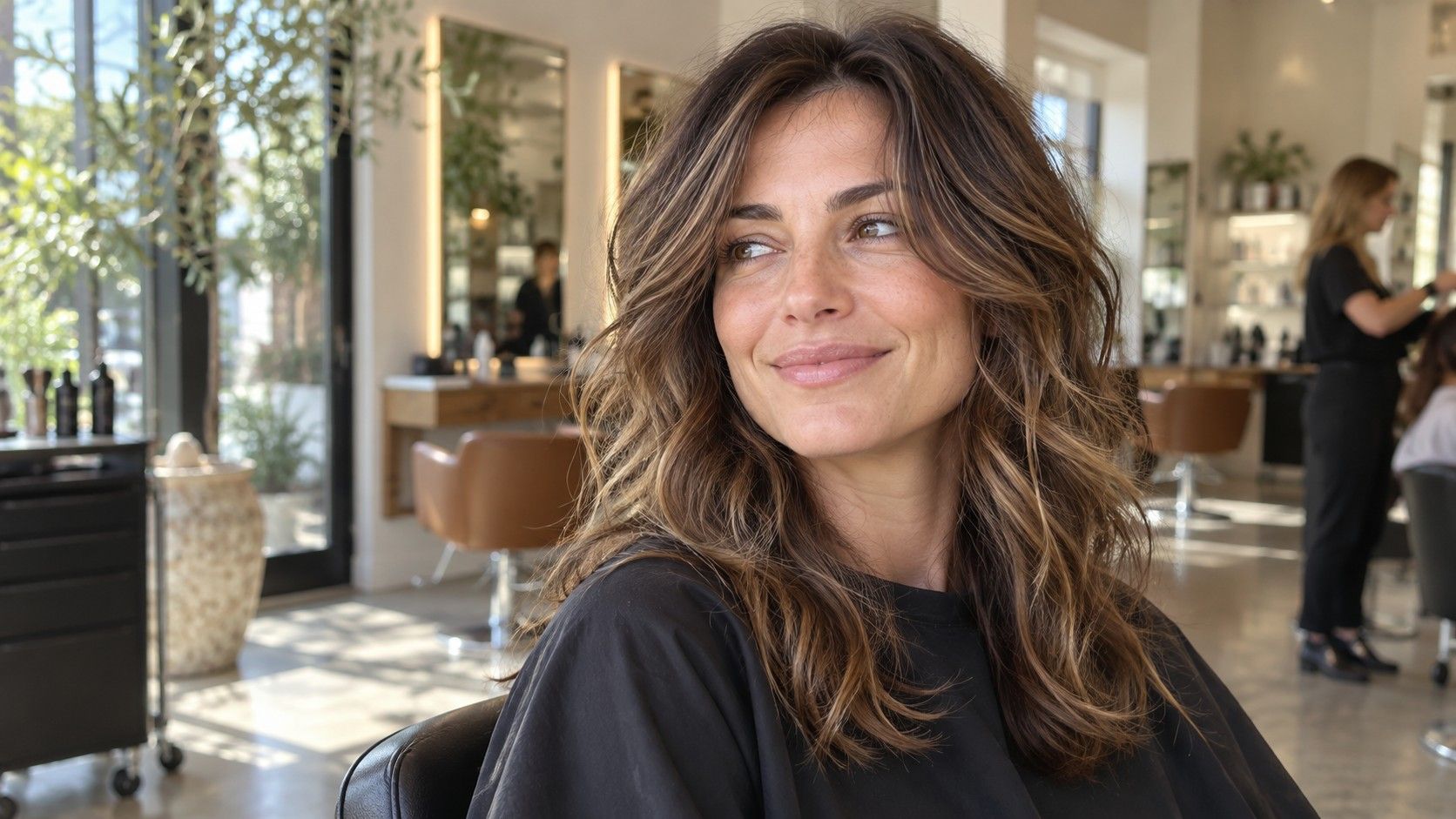
Bangs are a small section of hair with an outsized ability to change a face, and length is usually the reason a fringe feels either exactly right or inexplicably wrong. The useful question is not simply whether bangs sit at the brows or the cheeks. It is where they land after you part them, dry them, move your head, and let your own texture do what it always does. This guide gives you practical reference points, a realistic bang length chart, and a way to decide when a trim is worth booking.
Measure bangs in the version of hair you actually wear
Start with clean, dry hair styled in your usual direction. A fringe measured wet, pulled straight down, or held under tension can look a full centimetre longer than it will at breakfast the next day. If you normally blow-dry your bangs forward with a round brush, do that first. If you part curtain bangs in the middle, create that part before checking the length. The mirror should show the finished shape, not the raw material before styling.
Use the centre of the forehead as your primary checkpoint. Let the shortest central pieces fall naturally and note whether they finish above the brow, at the brow, between brow and eyelid, or at the upper lashes. Then check each side separately. A cowlick can push one corner up, while a side part can make the same hair look longer on the other side. Take a front-facing photo in daylight if you are trying to explain the length to a stylist; it is much clearer than saying that your bangs are “kind of too long.”
Do not judge every strand. A textured fringe is deliberately uneven, and trying to make each tip reach one imaginary line is how a soft cut becomes a blunt, short one. Look for the visual perimeter: the level your eye reads when the hair settles. That is the measurement that matters for the next appointment.
Use face landmarks instead of a vague short-to-long scale
A reliable bangs length chart is based on landmarks that stay put. The brow is the most common reference because it is easy to see and works with both straight and lightly textured fringes. The eyelid and lash line are useful only when you wear a fuller fringe; hair at this length can quickly become annoying if it separates into thin strings. For longer pieces, use the outer corner of the eye, the high point of the cheekbone, and the point where the hair can tuck behind the ear.
| Reference length | Where it usually lands | What to expect |
|---|---|---|
| Micro bangs | Well above the brows | Very visible forehead; grows out quickly and needs a deliberate shape. |
| Short fringe | At or just above the brows | Open-eyed and tidy, but a strong cowlick may lift it higher. |
| Classic brow fringe | Skims the brows | Versatile and forgiving; it can be nudged sideways without losing the fringe effect. |
| Long fringe | Between brows and upper lashes | Soft and adaptable, though it may split or touch mascara during the day. |
| Curtain bangs | From eye level toward cheekbone | Longer at the edges; the centre should still connect cleanly to the face frame. |
These names are not strict rules. A brow-length fringe on someone with a high brow bone may read shorter than the same measurement on a flatter forehead. Glasses also change the experience: ends that barely graze the top of a frame can feel distracting even when they photograph beautifully. Bring that everyday detail into the decision, especially if you wear glasses for work or driving.
Texture changes apparent length more than most charts admit
Straight, fine hair generally reveals its true length, although it can separate and expose gaps at the forehead. Wavy hair does not. A fringe that reaches the brows when damp may spring to the middle of the forehead once it is diffused or air-dried. Curly hair has even more shrinkage, and the amount can shift with humidity, product, and how recently it was cut. Cutting curly bangs to a wet measurement is a common route to an unplanned micro fringe.
If your hair waves, ask for the first cut with the fringe dry or nearly dry in its natural pattern. It is slower, but the stylist can see where each small curl lives. For a smoother finish, style the fringe before deciding whether it is too long; a light blow-dry can add enough stretch to change the answer. On the other hand, do not promise yourself that you will heat-style it every morning if you rarely do. Bangs length should suit the low-effort version of your routine, not an ideal routine that lasts four days.
Density matters as well. Thick bangs can appear shorter because their weight makes a blunt edge obvious. Fine bangs often need to be left a little longer so they have enough length to group together. If you are growing out a thin fringe, resist taking off every stray longer piece. Those pieces may be doing the work that makes the outline look intentional.
Account for cowlicks, partings, and the way bangs move
A cowlick at the hairline does not mean you cannot have bangs, but it does mean the ideal reference point may not be the centre of your forehead. A strong clockwise swirl can send the fringe to one side the moment it dries. In that situation, a slightly longer, softer fringe or curtain bangs usually behave better than a compact blunt line. The practical test is simple: wet the fringe, style it from the root in the direction you plan to wear it, then stop touching it. See where it chooses to split.
Watch your bangs in motion before booking a correction. Tilt your chin down as if looking at a laptop, turn your head as if talking across a table, and put on the glasses or sunglasses you use most. A fringe can look polished in a still mirror photo yet separate at the exact point where you live your day. If it only breaks apart after an hour outside, the issue may be product or root direction rather than length. A tiny amount of lightweight styling cream at the ends is different from coating the roots, which tends to make bangs greasy and stringy.
For a side-swept fringe, measure from the place it starts to bend, not from the longest diagonal end. The longest end often belongs to the face frame and is meant to reach the cheekbone. Trimming it to match the short side removes the shape that made it wearable.
Know when a home trim is a sensible fix and when it is not
A cautious home trim can work when you have an established blunt or softly textured fringe, the same stylist shape is still visible, and you only need to remove a few millimetres from the centre. Use sharp hair scissors, dry hair, and small vertical point cuts. Cut less than you think: you can take another fraction off, but you cannot add length back before a meeting, holiday, or wedding. Keep your hands off the hair while judging it; pulling it down makes the result shorter once released.
Skip the bathroom fix when you have curly hair, a fresh new fringe, a strong cowlick, very short micro bangs, or curtain bangs with a complicated face frame. Those shapes depend on graduation and balance. A horizontal snip across a curtain bang is especially risky because it creates a shelf right where the hair should melt into the layers. Likewise, do not trim when you are frustrated after a humid day. Wash, dry, and restyle first. What feels like excess length can be a temporary bend caused by sleep, sweat, or an awkward part.
If you do trim, take one front photo before and after. It sounds overly methodical, but it builds a useful record of the length you liked. At the next salon visit, show the photo rather than relying on a memory shaped by a bad hair day.
Plan a trim schedule around the length you want to protect
Hair growth averages roughly a centimetre a month, but bangs make that change obvious because they sit in the middle of the face. Micro bangs often need attention every two to three weeks if you want the deliberate short line to remain visible. A classic brow fringe is more forgiving at about three to five weeks. Long fringe and curtain bangs can often go six to eight weeks, particularly if the stylist has blended the sides into your haircut.
Book based on the moment your fringe starts affecting your behaviour, not only on a calendar. If you keep sweeping it out of your eyes, pinning it back for work calls, or avoiding your usual part, that is better evidence than a generic interval. It can help to schedule a quick bang trim halfway between full haircuts; many salons offer a short appointment for exactly this maintenance. Ask whether that service includes a dry restyle, because the final check matters more than the number of millimetres removed.
When you are growing bangs out, change the goal instead of repeatedly fighting the length. Let brow-length pieces become a soft side fringe, then ask for face-framing layers once they reach the cheekbones. Growing out feels easier when each stage is a usable style rather than a failed version of the old one.
Explain the right target to your stylist
The most useful request combines a landmark, a styling habit, and a problem to avoid. For example: “I wear them air-dried with a centre part; keep the middle at the brow, leave the corners long enough to hit my cheekbones, and do not make the cowlick side shorter.” That tells a stylist far more than “just a little trim.” Mention whether you straighten them, wear glasses, or need the fringe out of your eyes for exercise. Those are design constraints, not trivial preferences.
Bring one photo of the length you love and, if relevant, one photo of the length that failed. The contrast is useful: perhaps you liked the softness at the brows but not the pieces touching your lashes, or you loved the curtain shape but found the centre too sparse. A good trim is not an exact measurement copied from someone else. It is the point at which your hair texture, face movement, and daily routine all stop arguing with one another.