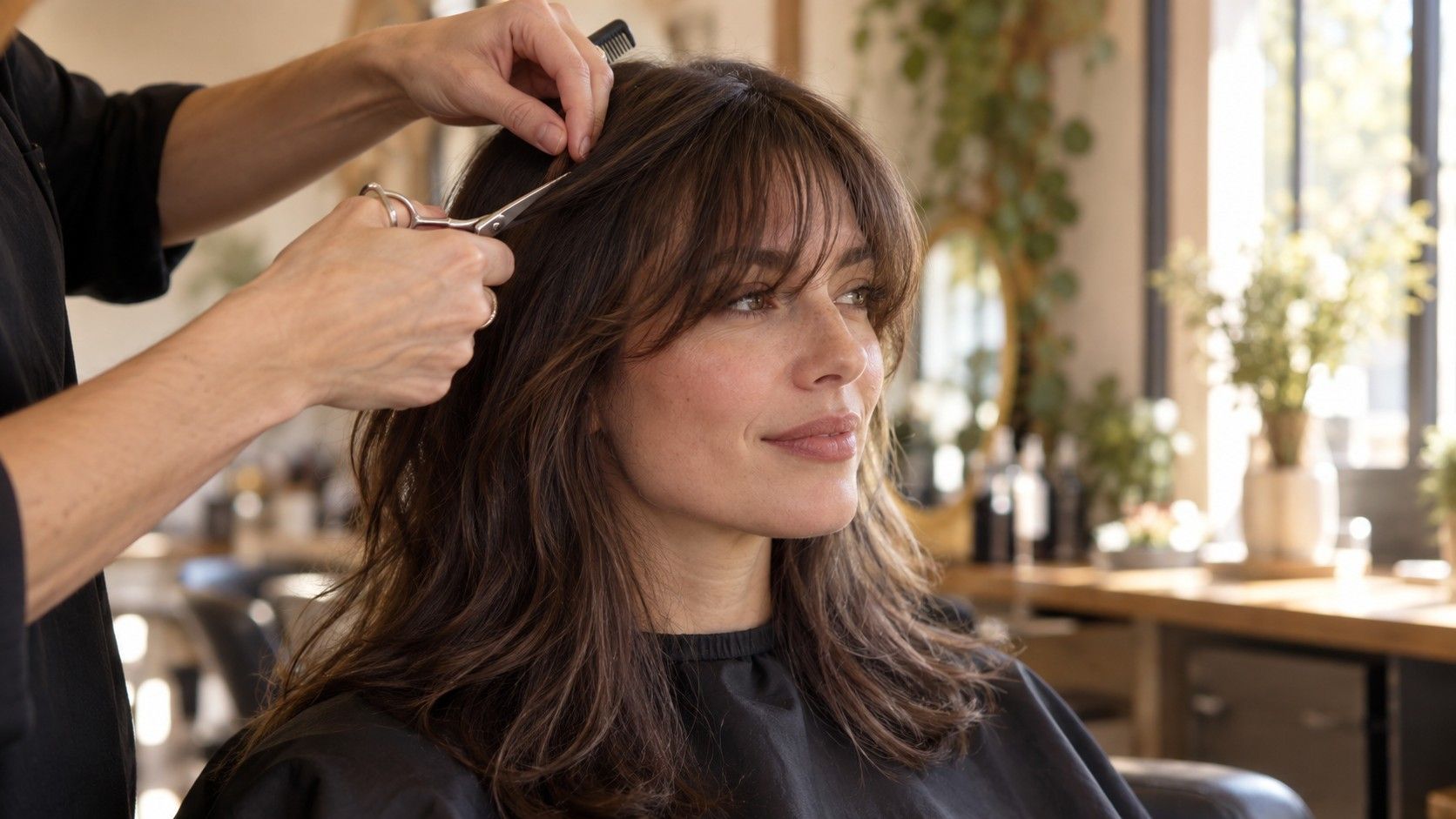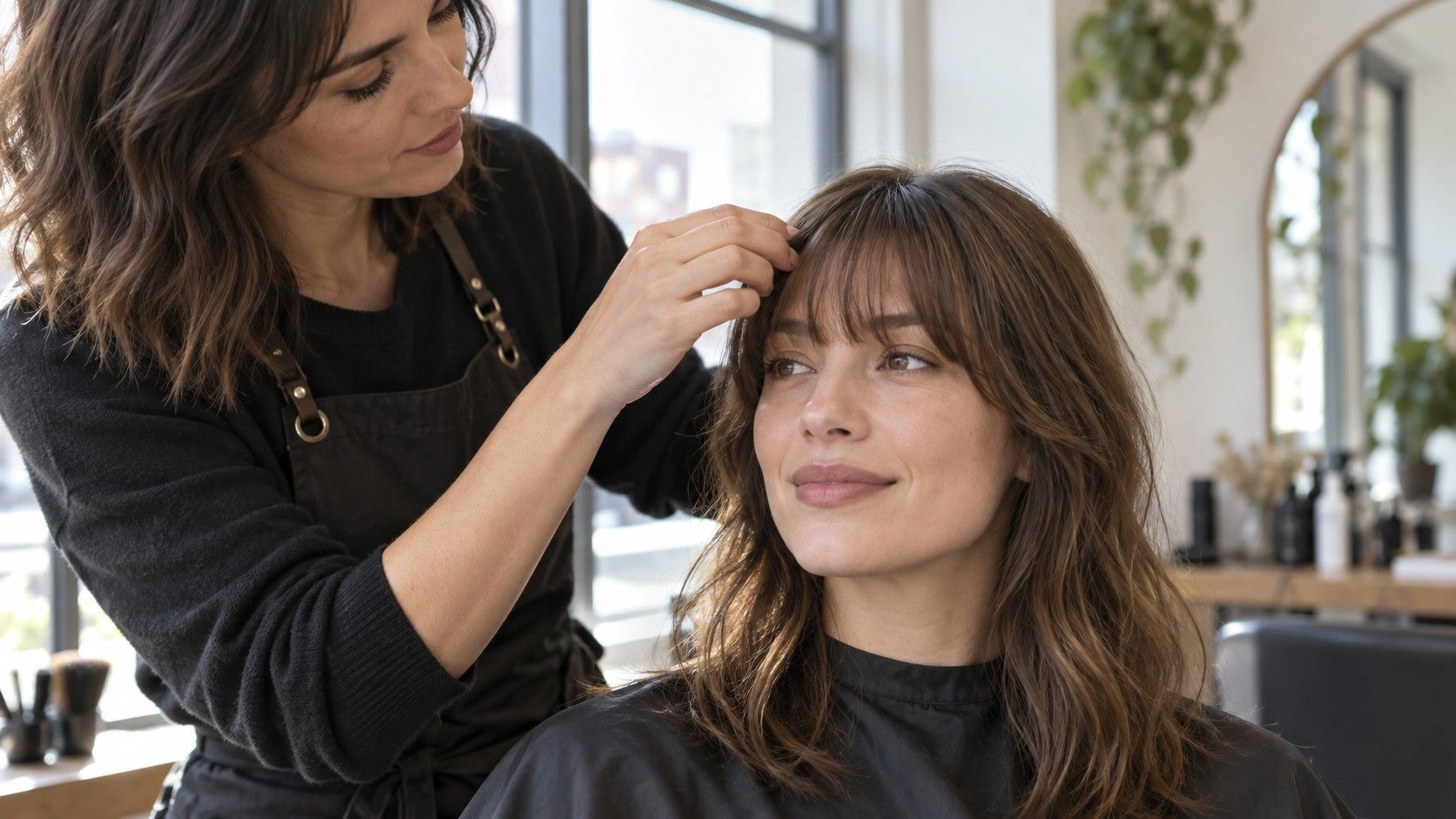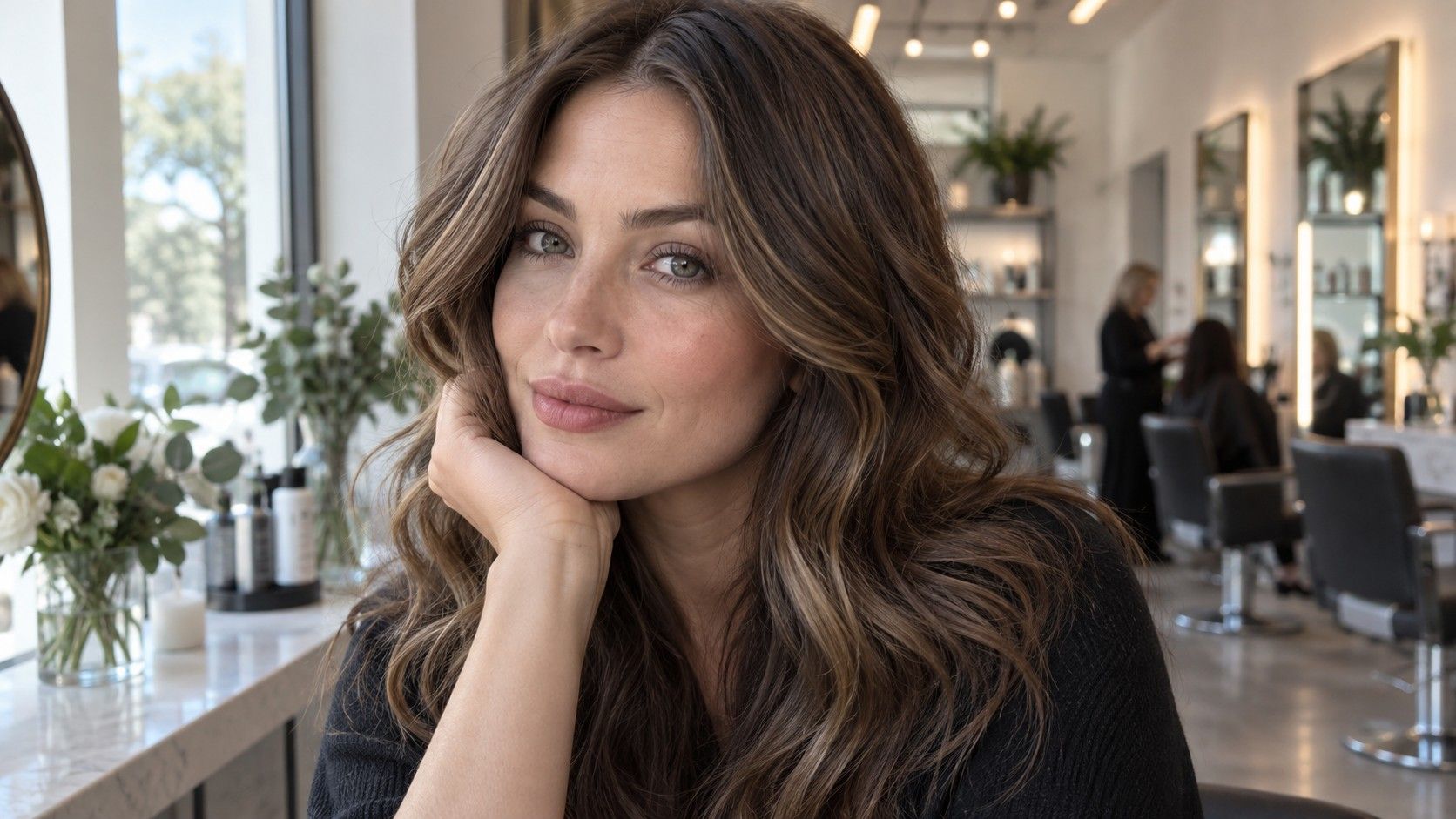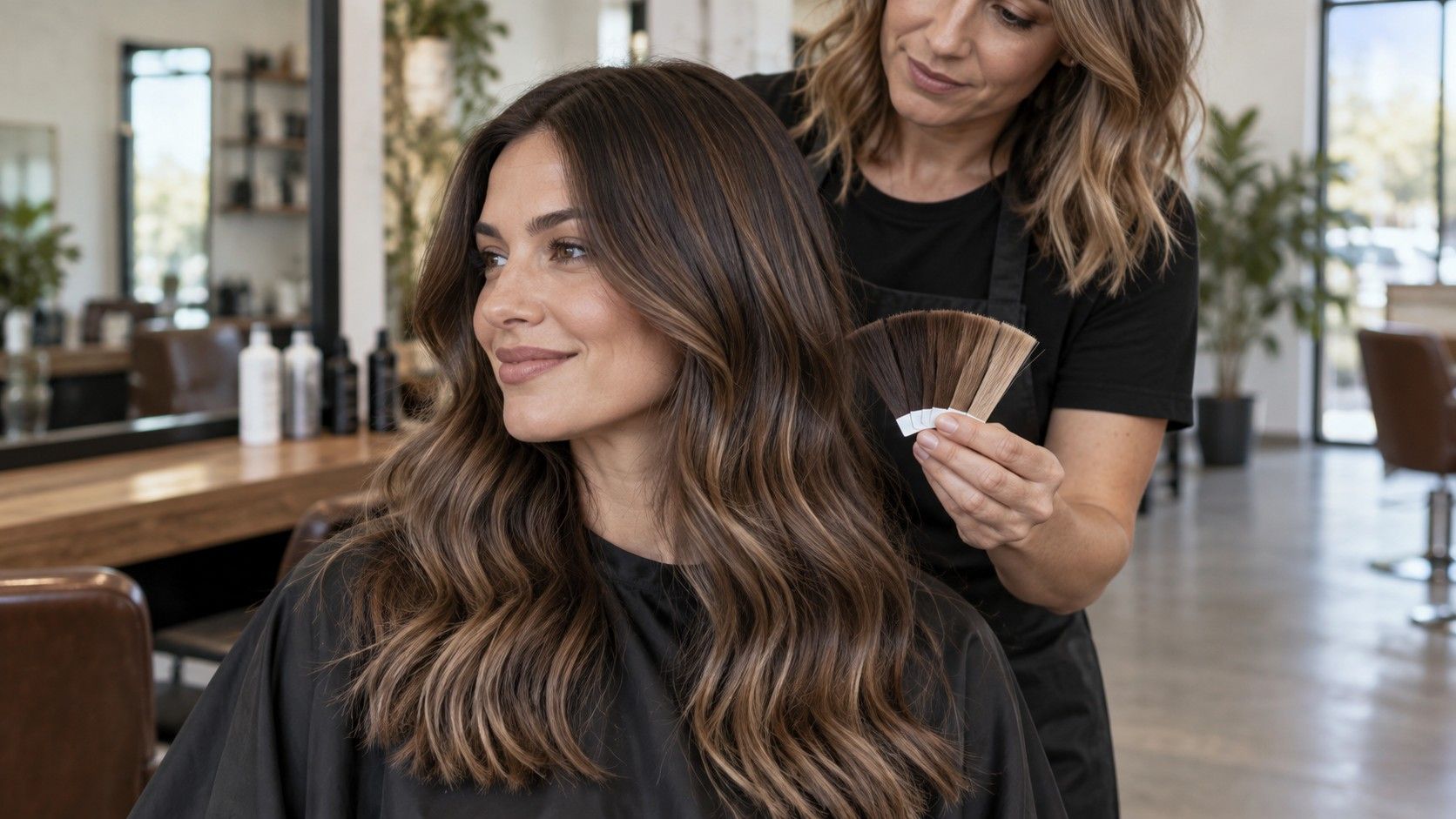
The useful part of hair color trends 2027 is not predicting one compulsory shade. It is noticing a change in taste: colour is looking less flat, less filtered, and more connected to the hair that is already on someone’s head. A good 2027 hair color should still make sense on a rainy Tuesday, six weeks after the appointment, when the roots are showing and there is no time for a full styling routine. That test separates a striking saved image from a colour a real person can keep.
Read a trend as a direction, not an order
Trend reports usually show the finished result under studio lights: a deep brunette with mirror shine, a peachy blonde that has just been toned, or copper arranged into glossy waves. The practical question is what the photo leaves out. Ask whether the model began with virgin hair, whether extensions add density, and whether a ring light is doing half the colour work. A photo can be excellent inspiration while still being a poor instruction for your own appointment.
For hair trends 2027, save references by effect rather than by a fantasy shade name. Put together one image for the depth at the root, one for the warmth through the ends, and one for the amount of contrast you actually like around the face. Three ordinary daylight photos are more useful to a colourist than twelve nearly identical salon reels. They also reveal whether you are asking for brightness, softness, or simply healthier-looking shine.
Soft brunette is becoming more dimensional
Brunette is no longer shorthand for one brown box dye. The wearable version has a dark base with small changes in tone: espresso near the scalp, walnut through the mids, perhaps a muted caramel reflection only where the hair bends. This keeps the overall impression rich without the obvious striped look that can appear when highlights are placed too evenly. It works especially well on shoulder-length cuts, where movement exposes the dimension without needing tight curls.
A gloss is often the sensible first step if you already have medium or dark brown hair. It can make faded ends look more deliberate and lets you test a cooler chocolate or a warmer chestnut before committing to lightening. The caveat is simple: gloss adds reflection, not a dramatic level change. If your reference has visible ribbons of light, say so. A gloss alone cannot turn very dark hair into the airy brown seen in a heavily highlighted photograph.
| Starting point | Wearable 2027 direction | What to check first |
|---|---|---|
| Natural medium brown | Walnut dimension and clear gloss | Whether old colour makes the ends pull warm |
| Very dark dyed hair | Deep espresso with subtle face framing | How many sessions lightening safely requires |
| Lightened brunette | Soft lived-in brunette with a darker root | Whether the ends need a trim before toning |
There is a budget advantage here. A softly blended brunette can be refreshed with a toner or gloss between larger appointments, while a high-contrast balayage may need more precise maintenance to avoid a band at the root. Do not assume “low maintenance” means no maintenance; brown shades fade too, particularly at porous ends. The difference is that a little fade often reads as natural variation rather than an obvious missed salon visit.
Blonde is moving toward softer grow-out
The most convincing blonde directions for 2027 hair color are not necessarily darker. They are more selective. Think bright pieces close to the face, a softer root, and lightness concentrated where the hair naturally catches daylight. This can suit a client who likes blonde but cannot return every four weeks. The grow-out line matters more than the label: beige blonde, honey blonde, or pearl blonde will all look harsh if the transition from root to highlight is too abrupt.
Bring your colourist a realistic maintenance limit. “I can book three lightening appointments a year, plus glosses if needed” is more actionable than “I want expensive blonde.” A partial highlight with a face frame may give the lift you want without asking every strand to become pale. On fine hair, that restraint can also preserve the soft texture that makes blonde look expensive in the first place.
Toning deserves a frank conversation. Cool beige can be beautiful on the day, but it may need violet or blue maintenance products and can look dull when overused. Warm butter and soft gold are often more forgiving as they fade, although they are not automatically right for every skin tone. Look at a swatch near your face in daylight, without the salon cape turning everything neutral. That small check prevents many “it looked different in the chair” disappointments.
Warm color is broader than bright copper
Copper remains a clear 2027 hair color idea, but the useful version is wider than vivid orange-red. Cinnamon brown, apricot blonde, muted strawberry, and auburn glaze all sit in the warm family. A person who loves copper photos but worries about the upkeep can often start with a cinnamon gloss or a few warm pieces around the face. It gives the same sense of warmth without making the roots look disconnected when the colour fades.
Natural redheads and previously lightened blondes need different planning. On light hair, a copper deposit may look intense quickly and fade fast with frequent washing. On a dark brunette, reaching a clean copper can involve lifting through orange stages that are not optional or especially glamorous. A reliable colourist will explain the route, not promise the final image in one vague phrase. If the goal is auburn rather than bright ginger, saying that early saves time and protects the hair.
Warm shades show condition very honestly. Dry ends can make a sophisticated cinnamon brunette look brassy; a fresh trim and a colour-safe routine may improve the result more than adding another formula. Check your water, too. Hard-water buildup and heat styling can pull warmth in a direction you did not choose. This is why a copper appointment should include a plan for refresh timing, not only the first reveal.
Use contrast around the face with restraint
Face-framing brightness is still useful because it changes how a cut reads without requiring a head of highlights. For 2027, the more wearable choice is a soft halo: a little lift around the hairline, blended into the lengths, with no hard white streak stopping at the cheek. It can make a layered cut look more active and gives a ponytail some dimension. The point is placement, not a louder stripe.
Contrast should match your normal styling. Someone who wears a clean centre part may enjoy a delicate, symmetrical face frame. Someone who pushes hair behind one ear or wears a deep side part may need an asymmetric placement to see the same effect. Mention your parting and whether you often wear glasses; both change which pieces sit against the face. It sounds minor, yet it is the kind of detail that turns a copied colour into a personalised one.
Turn a saved trend photo into a useful salon conversation
Start with the non-negotiables: your current colour history, the maximum time you will spend at the salon, and how frequently you are willing to tone or lighten. Then show the reference photos and explain what you like in each one. You might say, “I want this deep root, this warm reflection, and this amount of brightness around my face, but I do not want monthly highlights.” That is a much clearer request than asking for a trend name that can mean five different things online.
Before colour goes on, ask for the likely first-appointment result and the route to a lighter or brighter version if that is the eventual goal. Hair previously coloured black, heavily highlighted ends, and a sensitive scalp all change the plan. A sensible answer may be less dramatic than the image, but it is usually the better bargain. You get a colour that suits the hair’s condition now, instead of paying to correct a rushed result later.
The best hair color 2027 women can choose is usually the one that looks intentional between appointments. Whether that is a soft brunette gloss, blended blonde, cinnamon warmth, or gentle face framing, choose the version that fits your routine and lets the hair still look like yours. Trends are useful when they give you better language for that decision; they become expensive when they persuade you to ignore it.