The best hair color for brown skin is rarely found by matching a swatch to a skin-tone label. It is found by looking at the depth already around your face, the contrast you enjoy in photographs, and the amount of fading you will honestly tolerate. A glossy black-brown can look deliberate on one person and a little severe on another; the same is true of honey ribbons or copper. Start with what your own hair, brows, and wardrobe are already doing before asking for a dramatic lift.
Choose the contrast you want to see in the mirror
Brown skin hair color has a wide range because brown skin itself has a wide range of depth and undertone. Rather than trying to identify yourself as warm or cool under a salon cape, hold a dark towel behind the hairline and look in daylight. Notice whether your natural root melts into the brows or frames the face with a visible edge. That is the contrast you are working with.
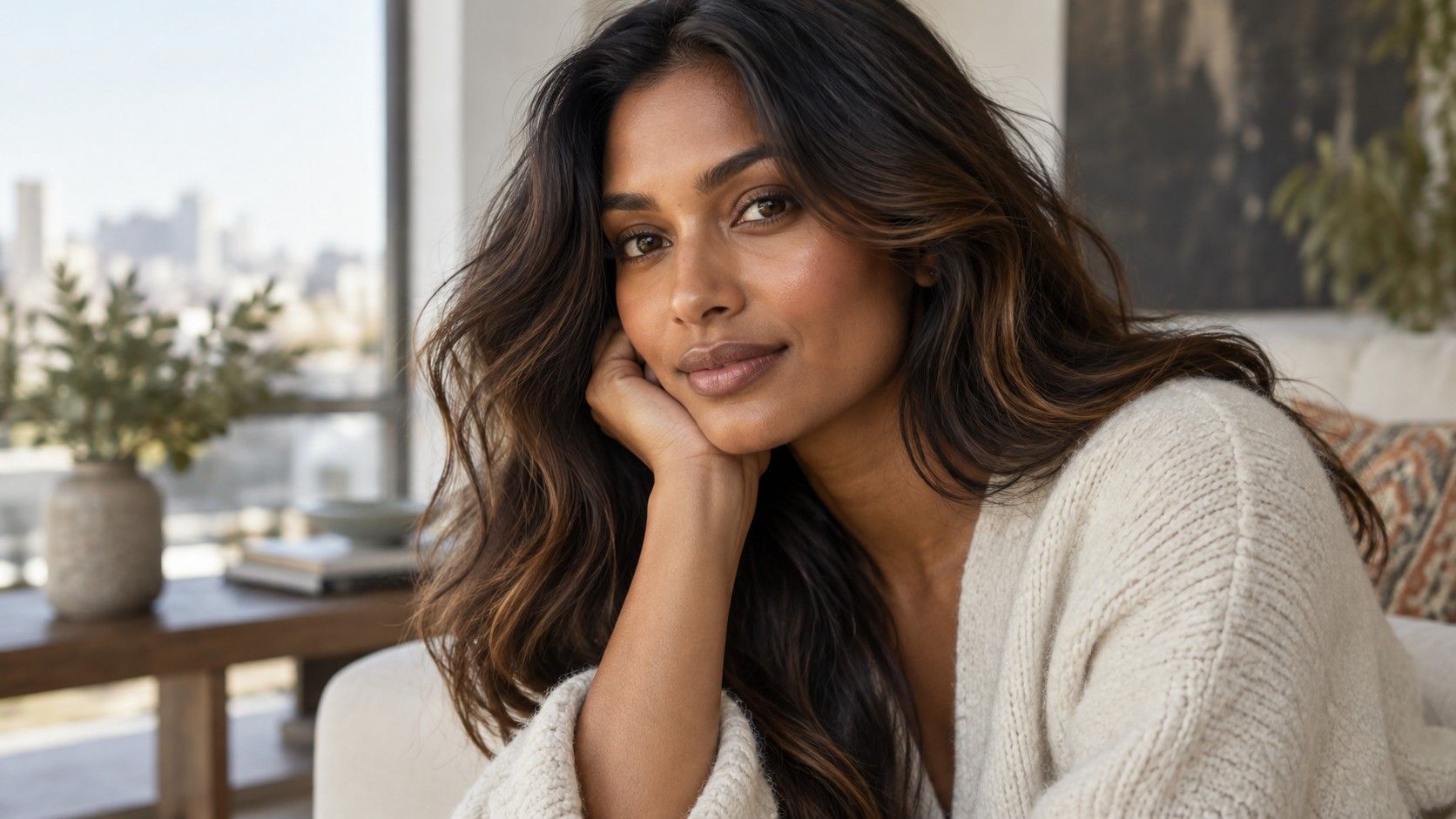
If your natural hair is near black and your brows are strong, staying between levels two and five usually keeps the face looking settled. Espresso, cola brown, and a soft black-brown give shine without making every regrowth line obvious. A level seven blonde can still be beautiful, but it creates a different kind of image: the hair becomes the first thing people notice, not a quiet frame.
Photographs are a useful reality check. Take one in window light with no beauty filter, then compare a dark-haired image with an old lighter one if you have it. Ask what changed around the eyes and cheeks. Some people love the sharpness that comes with deep hair; others discover that a little warmth at the mid-lengths gives their complexion more movement than an all-over pale colour ever did.
There is no universal list of best hair colors on brown skin. The useful choice is the one whose contrast still looks intentional when the hair is tied back, the roots have grown in, and you are wearing the clothes you actually own on an ordinary Tuesday.
When deep brunette or black-brown is the smarter first change
For someone with previously lightened ends, rich brunette is often less boring than it sounds. A colorist can rebuild depth with a warm filler, then layer an espresso or dark chocolate gloss over it. Skipping the filler is the common mistake: porous blonde ends can grab a flat greenish or smoky cast under a dark dye, especially after the first few washes.
Black-brown is gentler than blue-black if you want darkness without a hard ink outline. In salon light they may appear similar, but outdoors blue-black can pull cool and reflect a navy sheen. Black-brown leaves a trace of brown in the sunlight and tends to work more easily with golden jewellery, warm makeup, and natural dark roots. It also gives a colorist more room to brighten later.
Try a demi-permanent gloss before committing to permanent colour. It will not turn bleached hair into untouched virgin hair, but it shows whether a deep tone makes you feel polished or boxed in. Tell the stylist if you have used henna, black box dye, or a colour-depositing mask. Those details change the lifting conversation, even when the hair currently looks simple.
Maintenance is not zero just because the shade is dark. Dark dyes can fade warm at the ends and leave pale lengths looking hollow. A sulphate-conscious wash routine, a brown or espresso depositing conditioner only when needed, and a gloss refresh every six to eight weeks keep the depth believable. Overusing pigment shampoo can make the surface dull, which is the opposite of why most people chose brunette.
Add warmth with ribbons instead of bleaching the whole head
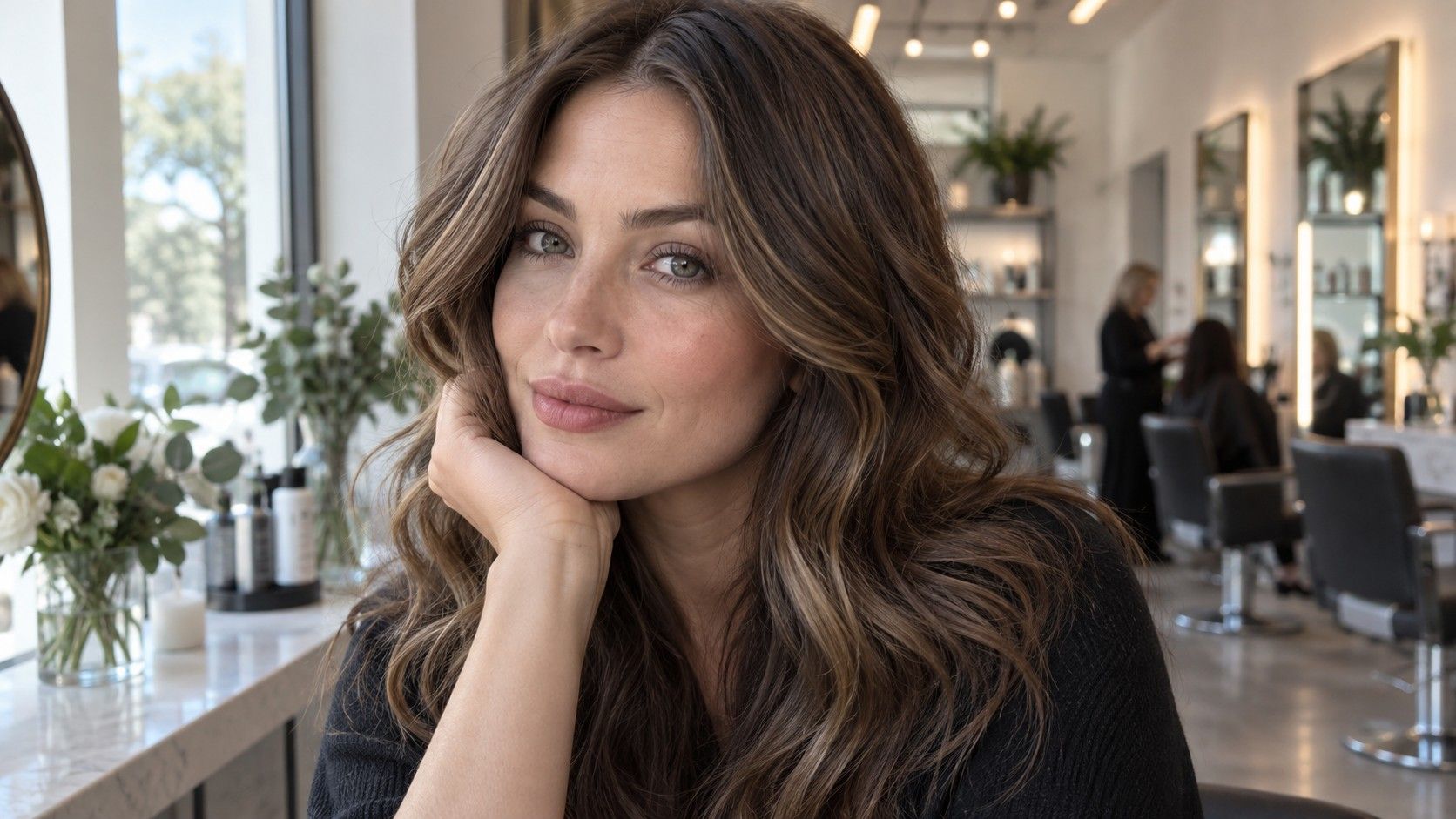
Caramel, cinnamon, honey, and chestnut are popular for a reason: they can catch light on brown skin without erasing the natural root. The placement matters more than the name on the bowl. A few painted pieces around the face and through the crown can read richer than a full head of tiny foils, particularly on dense curls or coils where the colour appears and disappears as the hair moves.
Ask for a test strand if your ends are already fragile. A stylist can estimate the lift level, but a strand reveals whether your hair reaches golden blonde cleanly or stalls at a strong orange. Neither result is a personal failure. It simply determines whether the flattering result is a toasted caramel at level six or a lighter honey that needs more than one appointment.
Fine straight hair usually benefits from fewer, finer ribbons and a soft root shadow; too many broad highlights can look stripy when it is blow-dried smooth. On a bob, the front pieces should be checked with the hair tucked behind the ear. On curls, look at the placement both stretched and dry, because a highlight hidden in a curl cluster may vanish in real life.
Warm dimension still needs a plan for brass. Brass is not the same as gold: gold can look expensive and alive, while a harsh orange band often means the lift or toner did not match the base. A gloss at the right level, not an aggressively purple shampoo, is usually the calmer correction. Purple products are designed for yellow; they cannot magically turn a level-six orange into a cool blonde.
Use bold colour as an accent before making it all over
Auburn, burgundy, cherry cola, and deep copper can be striking on brown skin, but an all-over application asks more of you than the inspiration photo suggests. Red molecules fade quickly, and light copper over a very dark base often requires lifting first. A subtle cherry-brown gloss or a copper panel underneath the crown lets you see the family of colour without signing up for a bright root line every four weeks.
Face-framing panels are another low-commitment route. They work best when they are wide enough to be seen but not so pale that they look disconnected from the rest of the hair. Bring photos with a similar curl pattern and starting depth, not only a similar skin tone. A copper streak on loose waves reflects light differently from one on a tight coil pattern, even when the formula is identical.
Vivid shades need a practical wardrobe check. Put a rust-coloured scarf, berry lipstick, or cool red top near your face and see which version makes your skin look clear rather than greyed out. This sounds less technical than a toner chart, but it prevents a familiar disappointment: loving a colour in the salon and feeling oddly dressed by it at home.
If you are tempted by platinum, separate the idea of pale hair from the idea of high contrast. A creamy beige, silver-brown money piece, or pale ends under a dark root can give the same visual energy with less exposure to bleach. The most dramatic option is not automatically the most flattering or the most durable.
Ask the bleaching questions before you book the transformation
Before bleach touches the hair, ask what level you need to reach, how many sessions that requires, and what happens if the test strand says no. A good consultation includes your colour history for at least the last two years: permanent black, keratin smoothing, henna, relaxers, and at-home highlights all matter. The answer may be a staged plan rather than the exact result you saved.
Ask where the damage risk will be highest. It is often not at the root; it is on old ends, around the crown where heat styling is frequent, or along a previous highlight line. If your hair snaps easily when wet, the sensible appointment may be a bond-building treatment and a darker gloss now, then lightening later. That is a useful decision, not a failed makeover.
| Goal | A practical starting option | What to plan for |
|---|---|---|
| More shine, almost no contrast | Espresso or dark chocolate gloss | Refresh the gloss every six to eight weeks |
| Light around the face | Caramel or honey ribbons with a root shadow | Test strand and toner maintenance |
| Visible seasonal change | Cherry-brown or deep copper panels | Fast fade and colour-safe washing |
| Very light result | Staged beige or golden blonde service | Several sessions and regular trims |
Bring a budget question too: ask whether the quoted service includes toner, a root melt, treatment, and the first trim. These small items are often what make a high-lift result look finished. The best hair color for brown skin is the colour that respects your hair’s condition and your calendar as much as it respects an undertone chart.