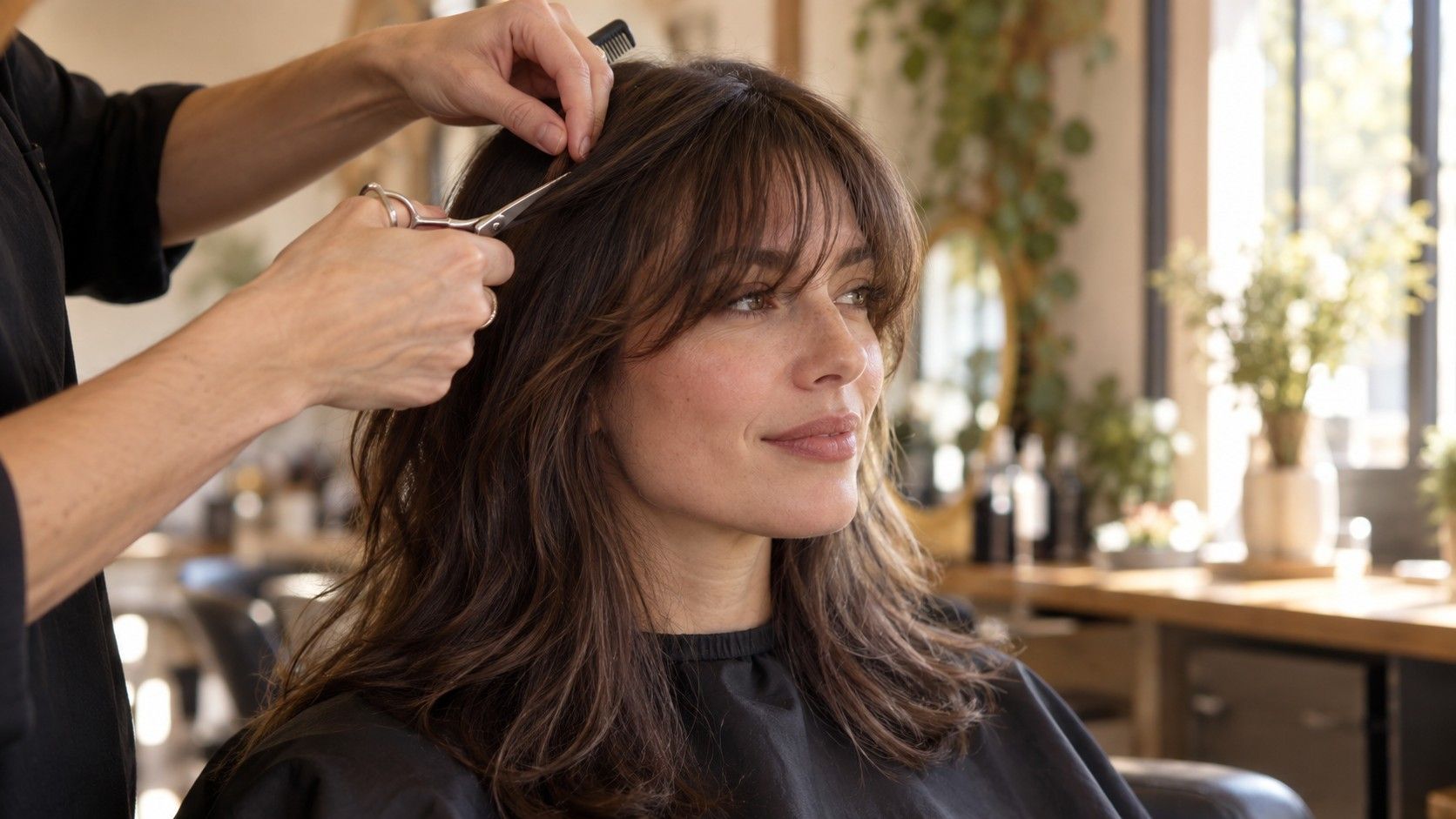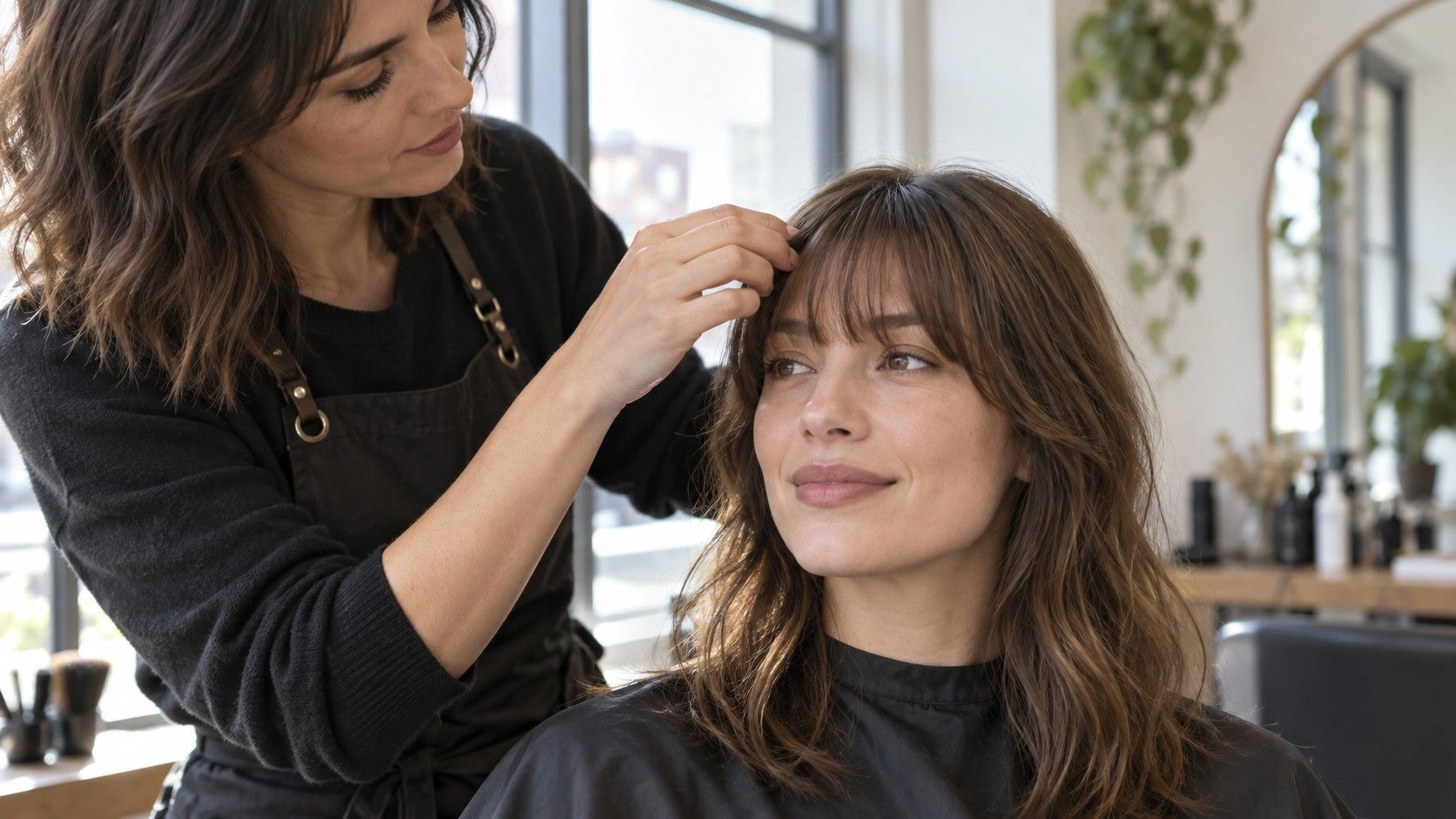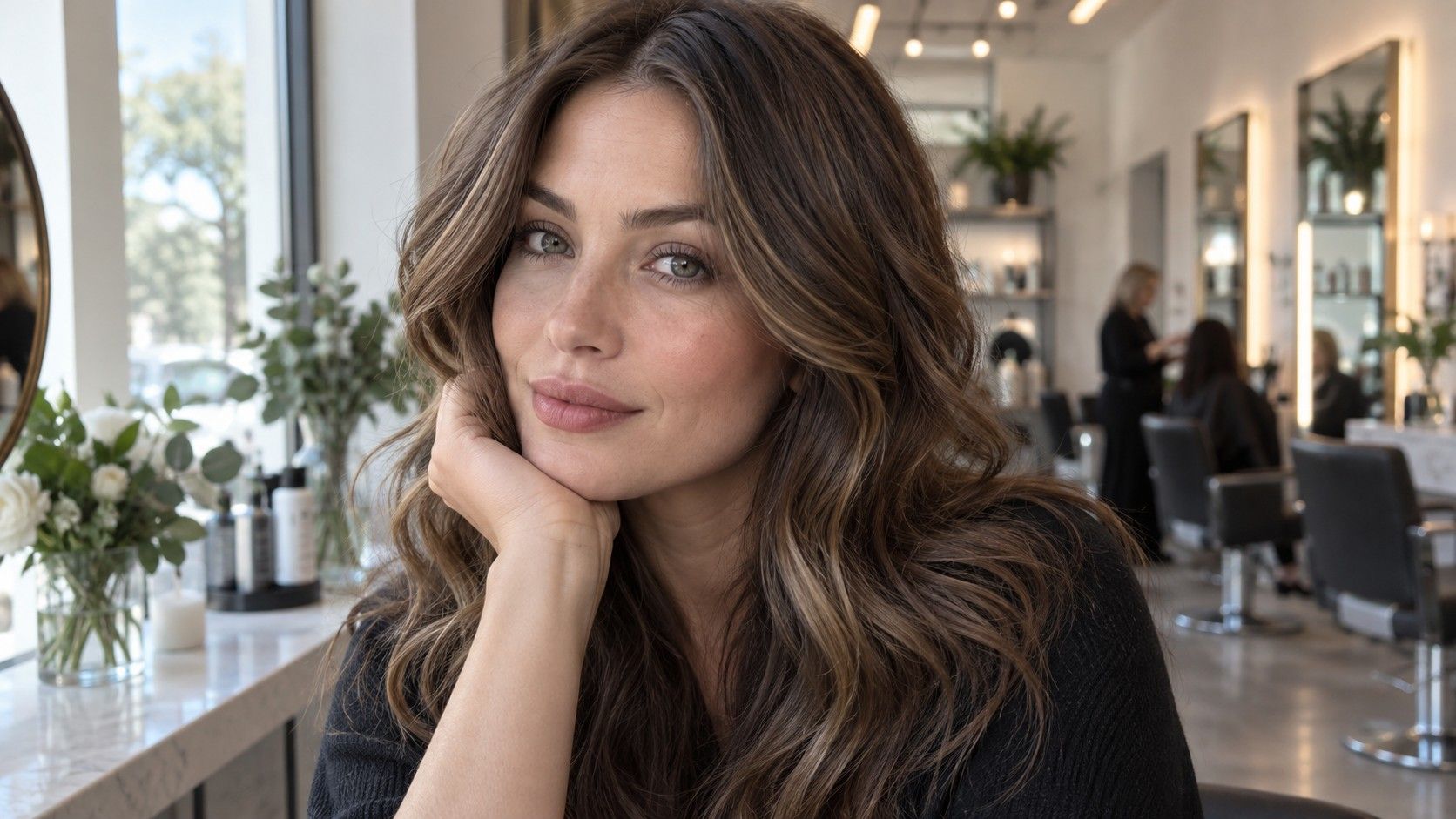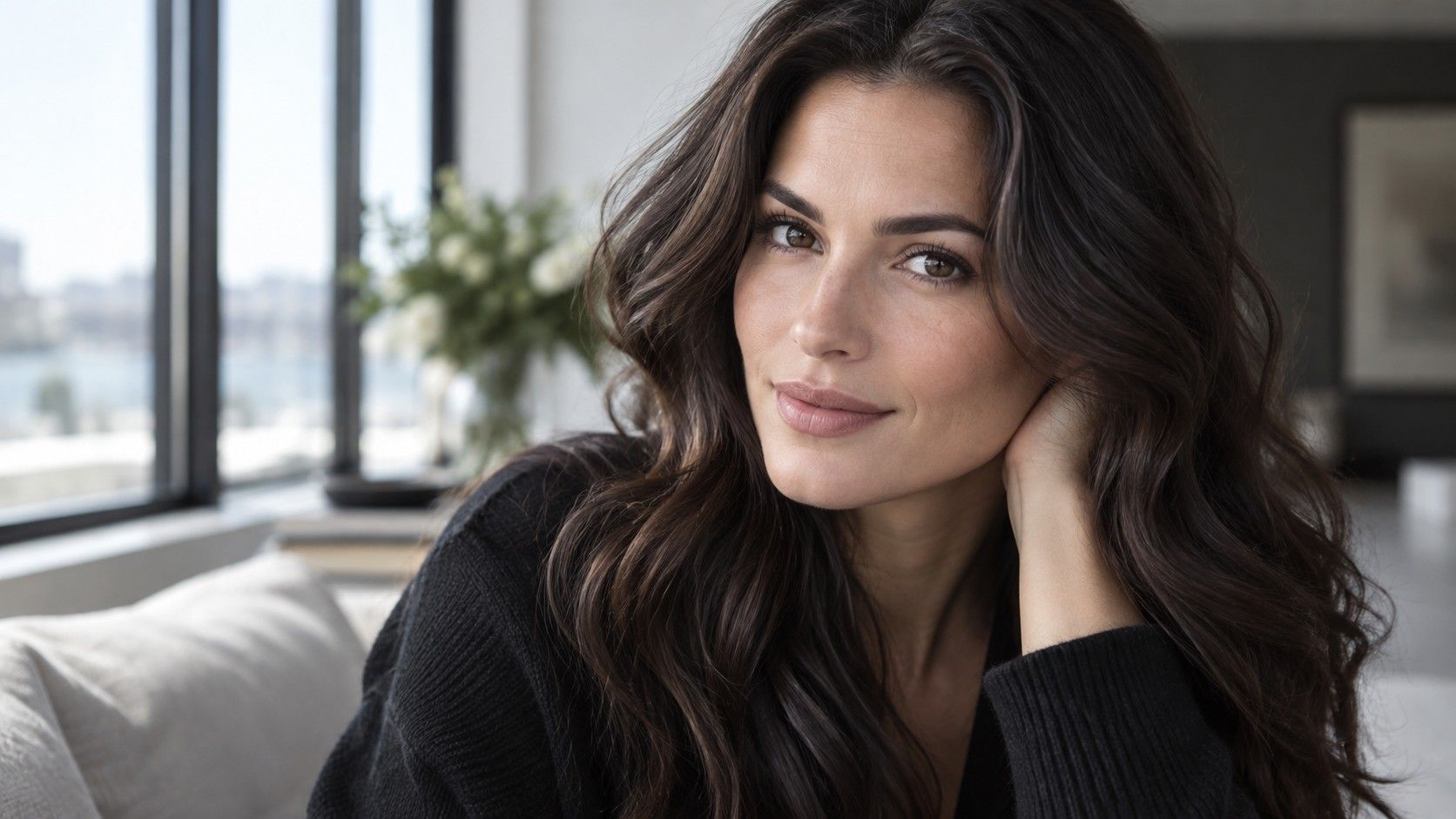
Deep Winter hair colors work when they hold their depth without turning muddy, orange, or like a single painted slab. This palette can carry darkness that would overwhelm many other complexions, but it still needs the right undertone and a little reflected light. Before choosing espresso, blue-black, or burgundy, look at the face without makeup in daylight: are the eyes, brows, and hair naturally distinct from the skin? If yes, rich colour may support that contrast. If the proposed shade makes the hair arrive in the room before you do, step back one level.
Read Deep Winter contrast in real life
High contrast is not the same as choosing the darkest tube on the salon shelf. Deep Winter usually combines visual depth with clarity: dark lashes or brows, a clear eye pattern, and skin that can hold its own beside black, deep navy, or saturated berry. Try the fabric test at a window. Put charcoal, black, and chocolate brown near the face. Black often looks intentional on Deep Winter, while warm brown may make the skin read yellow or the whites of the eyes less clear.
That test also explains why a washed-out medium ash brown can disappoint. It may be technically cool but not deep enough to echo the natural contrast. Still, do not use a seasonal label as a permission slip for anything dark. Existing colour history matters. Bleached lengths, faded red dye, and heavy grey coverage all change how a formula receives pigment. Ask the colourist to assess a strand, especially at the nape and through the ends, before promising an even cool result.
Choose an espresso brunette with visible dimension
Espresso is often the most flexible answer for someone searching for the best hair colors for Deep Winter. It has enough brown to look believable and enough cool depth to avoid a reddish cast. The attractive version is not usually one opaque permanent colour from root to tip. A root slightly deeper than the mids, a neutral-cool gloss through the lengths, and a few almost-hidden lowlights create the reflected shine that makes dark hair look expensive rather than boxed in.
In the consultation, use depth language instead of brand names: near-black but not black, cool-neutral rather than smoky grey, glossy rather than matte. A level-three or level-four formula may be plenty for a person who sees themselves as very dark. If grey coverage is important, ask whether the salon will blend a natural base into the cool target. Pure ash can grab hollow on resistant grey; an experienced colourist builds coverage and tone separately. Check it once under warm indoor lights, because that is where an accidental red or orange undertone becomes most obvious.
| Shade family | Best use | Practical caution |
|---|---|---|
| Cool espresso | Reliable everyday depth and grey coverage | Refresh gloss before warm fading is obvious |
| Soft black | Maximum contrast without a blue cast | Hard to lift later; test depth first |
| Blue-black | Clear, dramatic shine on healthy dark hair | Can fade greenish or look harsh on porous ends |
| Cool burgundy | Colour interest while retaining depth | Red molecules fade quickly and can stain |
Decide whether blue-black is realistic for your routine
Blue-black has an unmistakable appeal: it can make dark eyes look glassier and give a blunt cut a clean graphic edge. It also creates a high-maintenance contract. On virgin dark hair it may read as glossy ink; on previously lightened or porous hair it can absorb unevenly, fade dull, or leave a cool greenish cast after repeated shampooing. The salon should not skip the conversation about removal. Black pigment, especially layered permanent black, is slow and unpredictable to lift.
A safer first experiment is a blue-black gloss over a dark brunette base, or a deep midnight panel beneath the top layer. You see the cool reflection in outdoor shade without locking the entire head into one difficult future correction. Keep the hairline slightly softer if you do not wear strong brow definition. A fully saturated black edge around a pale forehead can feel severe even on a true Deep Winter. Shine is part of the formula here: dry, rough black hair reads flatter and older than the same depth on conditioned lengths.
Use burgundy and berry tones as depth, not brightness
Cool burgundy, black cherry, and deep wine can suit Deep Winter beautifully because they preserve the palette's intensity. The key is where the red sits. A warm mahogany or copper-red pulls the result toward autumn and can look disconnected from cooler skin. Ask for a berry or violet-red reflect over a dark base, then inspect it in shade as well as direct sun. If it only looks rich in sunlight and brown indoors, the underlying formula may not have enough cool pigment.
Fading is the practical issue. Red molecules escape fastest, and heat tools plus frequent shampooing make the change obvious at the face-framing pieces. Plan a colour-depositing mask or gloss between appointments rather than repeatedly applying permanent colour to the ends. If you are covering grey, a balanced dark base at the root with burgundy through the lengths usually ages better than a bright uniform red. It leaves room for regrowth and keeps the effect intentional when the shine softens.
Keep dark colour from becoming one-dimensional
The complaint after a dark transformation is often not that the shade is wrong; it is that it looks like a helmet. That happens when every section has identical density, the ends are over-processed, or the cut has no movement. Ask for micro-lowlights, a root melt, or two close tones only if they can be placed subtly. Deep Winter does not need blonde contour ribbons to create shape. A cool level-three beside a neutral level-four is enough to catch light when the hair moves.
Maintenance should focus on surface quality. Use a gentle colour-safe cleanser, protect hair from high heat, and book a clear or cool gloss when the finish loses reflection—often six to eight weeks for a rich brunette. Take a photo in indirect daylight before each appointment so you can see fading honestly rather than relying on salon mirrors. The strongest Deep Winter colour is not necessarily the deepest possible shade. It is the one that makes the eyes, brows, and skin look equally deliberate, with enough gloss and variation that the hair still looks alive.