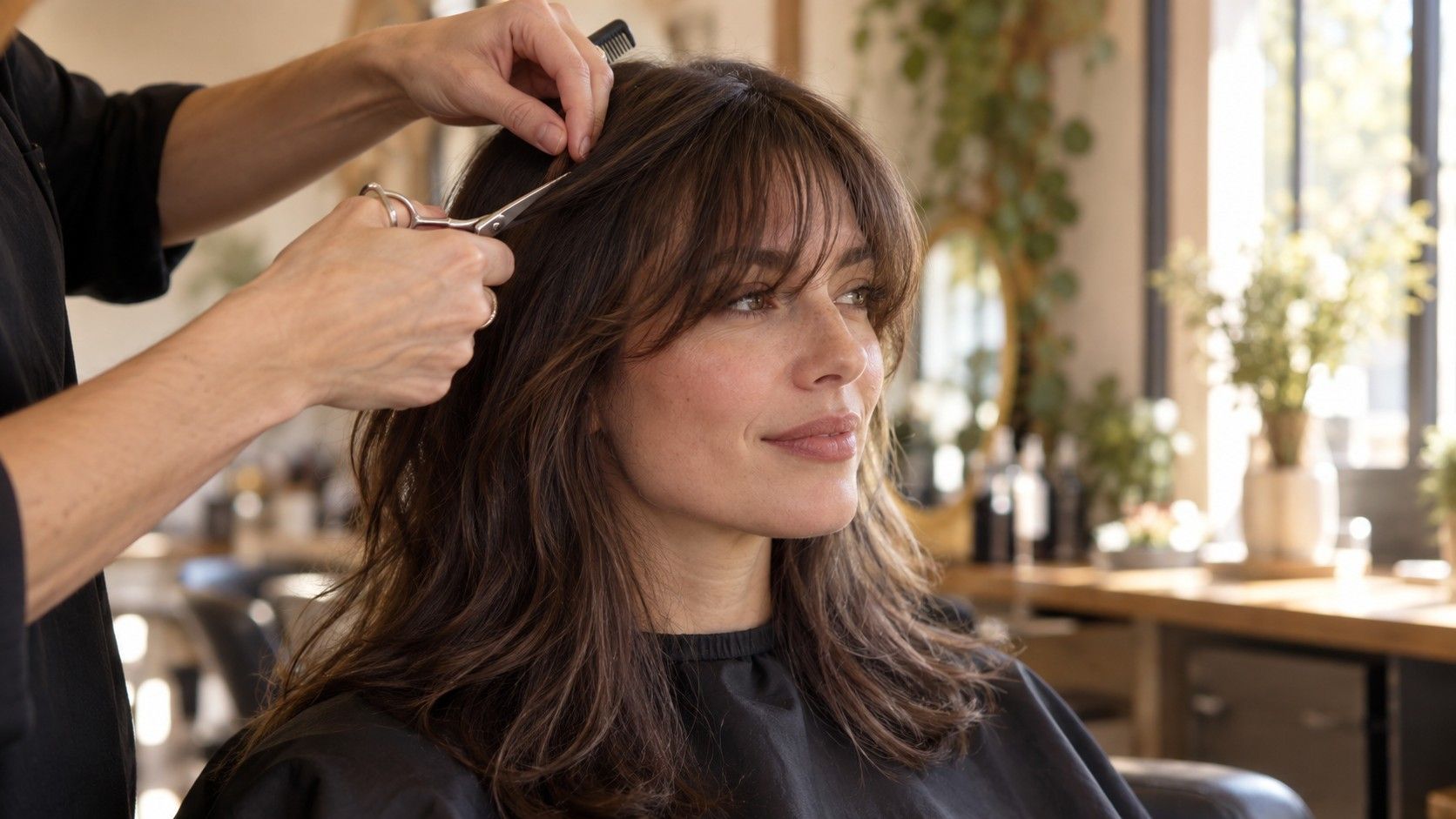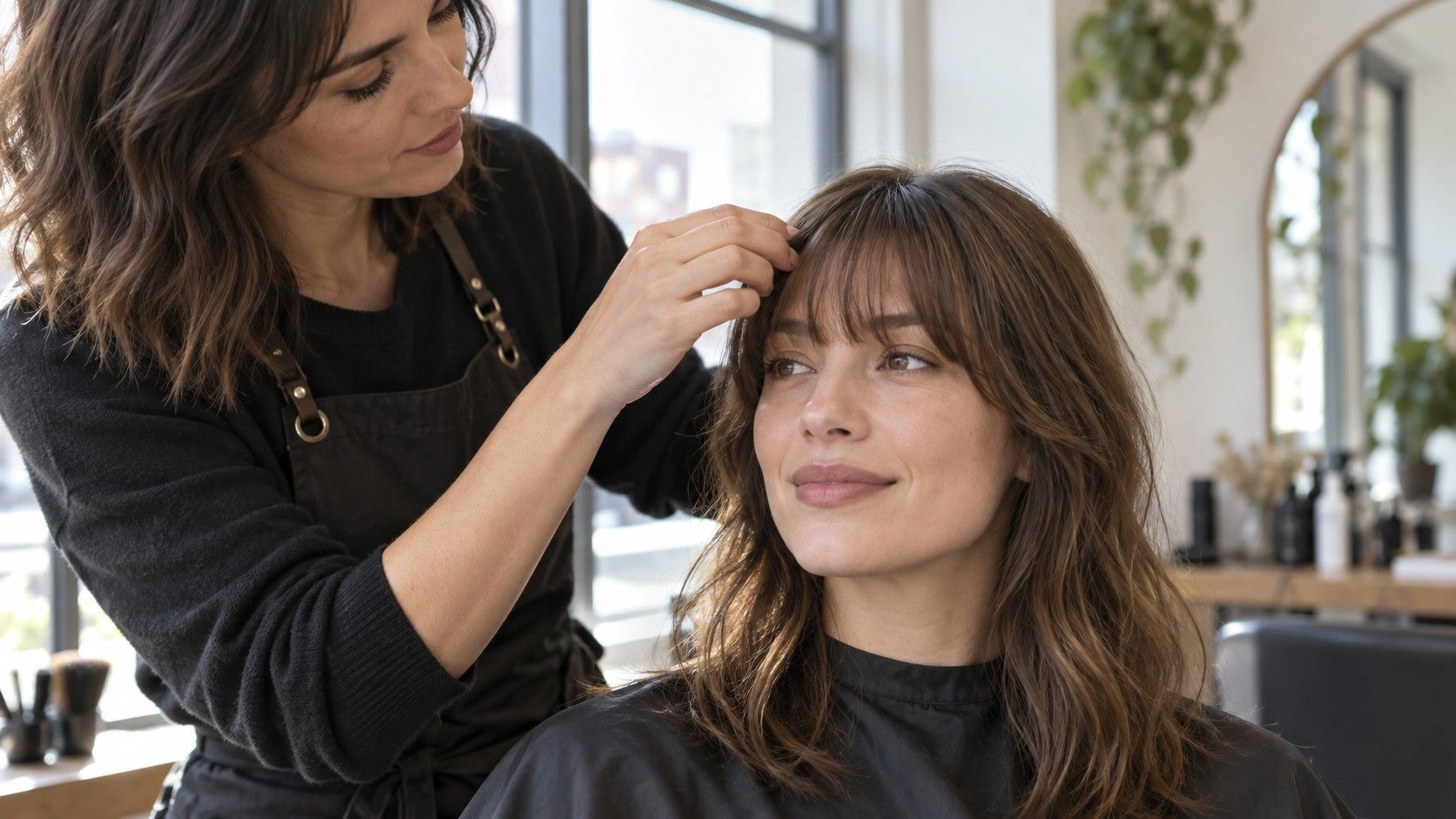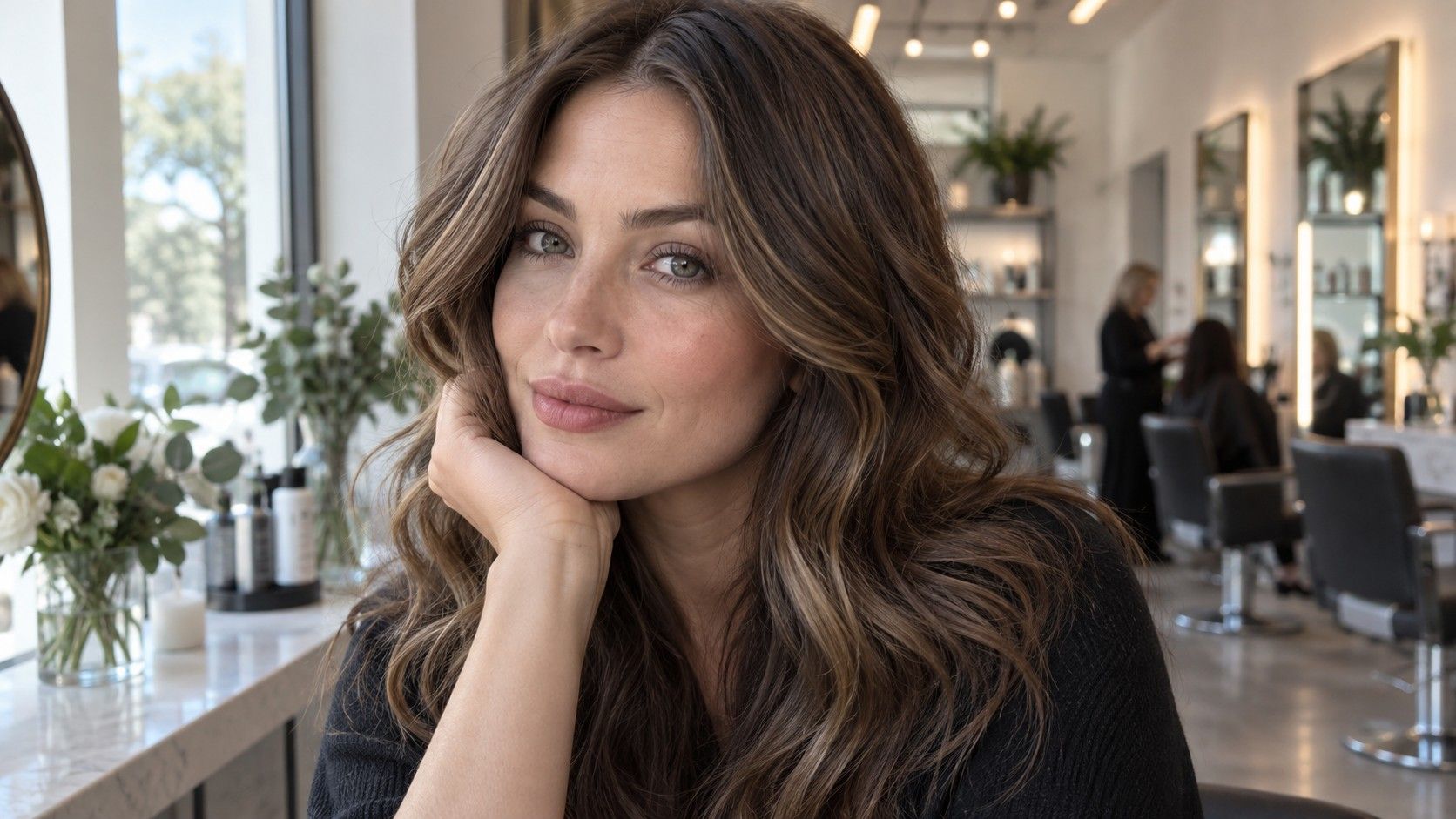
Cool Summer hair color is less about turning every strand ash than about keeping the overall picture muted and gently cool. Many people arrive with a photo of icy platinum, then find it makes their skin look tired or their brows suddenly too dark. The better question is whether a shade keeps softness between skin, eyes, and hair. Beige blonde, mushroom brown, and a quiet rose-brown can all work when their depth and fade pattern are chosen honestly.
Spot the warmth that is actually disrupting the balance
Warmth is not automatically wrong. A little golden reflection can look natural in sunlight, especially on untreated hair. The problem appears when hair pulls strongly orange, yellow, or red while the face reads soft and cool beside it. Stand by a north-facing window with no tan or beauty filter and compare a muted grey top with a warm camel one. If the grey makes the eyes clearer and the camel makes the face seem blotchy, a very warm hair colour may fight the same battle.
Look at the distinction between your brows, skin, and natural root. Cool Summer usually carries low to medium contrast, so a solid jet black or a yellow blonde can create an abrupt line. That does not ban dark hair or blonde hair; it means adding a root shadow, translucent gloss, or fine dimension may matter more than chasing a dramatic single tone.
Old colour is often the misleading part. Faded brunette can expose red undertones, while highlights can turn butter-yellow after mineral-heavy water and hot styling. Before calling yourself incompatible with cool shades, ask when the colour was last toned and what is on the lengths. A fresh gloss may reveal that the starting canvas is closer to mushroom brown than it looked under bathroom lighting.
Take a photo in shade as well as direct sun. Direct sun exaggerates warmth in almost everyone’s hair, while shade shows the colour that accompanies your face through most of the day. It is a small check, but it prevents choosing an extreme toner to fix a problem only visible at noon in July.
Pick blonde by depth first, then by the name on the swatch
For cool summer hair color ideas, beige blonde is often more forgiving than white blonde. It has a soft grey-beige veil over a light base, so it looks polished without making the complexion compete with a stark icy strip. On someone with a level six or seven natural root, a beige balayage with a shadowed base can be lower maintenance than full foils and still read clearly blonde.
Ash blonde needs a distinction too. A clean ash tone can be elegant; an overloaded grey toner can look khaki or dull against dry porous ends. Ask the stylist to show you the target level. Hair that lifts to level eight may suit a sandy beige, while a pale pearl typically needs a cleaner level-nine or level-ten canvas. The right answer may be two lightening appointments, not a stronger toner in one long session.
Fine hair can look fuller with a mix of beige, mushroom, and a few cooler lowlights. Very uniform pale blonde sometimes makes fine ends look see-through. On thick waves, broader painted panels can keep the colour from becoming a cloud of tiny highlights. View the placement with hair air-dried, because a bright ribbon that looks refined after a blowout can disappear once the natural texture returns.
| Starting situation | Useful shade direction | Watch for |
|---|---|---|
| Natural dark blonde | Beige highlights and a soft root melt | Yellow fade after heat styling |
| Previously blonde ends | Muted pearl-beige gloss | Over-toning porous tips grey |
| Medium brown base | Mushroom balayage with cool ribbons | Orange lift bands near old colour |
| Grey at the hairline | Neutral-cool beige coverage blend | A too-dark solid root line |
Bring photos that show the colour in ordinary indoor light, not only on a beach or under a ring light. The best hair color for Cool Summer should still feel calm in an office lift, in a car mirror, and on an overcast day. Those are where a balanced beige earns its place.
Keep brunette soft with mushroom, taupe, and rose-brown
Cool Summer brunettes do not have to be flat brown. Mushroom brown combines a neutral brown base with a faint ash or taupe cast, which keeps the result quiet rather than red. It is especially useful if you have grown out bright highlights and want the hair to look denser again without dropping straight into an opaque dark box-dye effect.
Cool rose brown is another option when ordinary ash feels too stern. Think of a muted mauve reflection inside brown, not pink hair. It can give life to medium brown lengths while staying within soft contrast. The caveat is fading: rose pigment can reveal warmth underneath, so a gloss refresh is normally more convincing than trying to maintain it with a strongly pigmented shampoo at home.
If grey coverage is part of the appointment, mention it early. Permanent coverage at the root and a demi-permanent gloss through the ends often creates a more natural result than one solid formula everywhere. A hard level-four root with translucent level-six ends may look accidental within weeks; a carefully melted root keeps the grow-out less obvious.
Check the shade against your everyday makeup. A mushroom brown that is perfect with a cool berry lip can appear too flat when you wear only moisturiser, so ask to see it before the final blow-dry. If you want more brightness, fine cool-beige pieces around the cheekbones are usually safer than a high-contrast money piece.
Use a gloss as a rehearsal, not a rescue treatment
A gloss is one of the most useful ways to test cool summer hair colours before a major change. It can mute brass, add shine, and shift the surface toward beige, ash, or rose-brown without making a permanent promise. It cannot lighten dark hair, erase an orange band from an incomplete bleach job, or repair split ends. Keeping that boundary clear makes the appointment less disappointing.
Ask for a gloss that is slightly translucent rather than an opaque ash overlay. On natural roots, a too-dense cool formula can look smoky; on damaged ends, it may grip unevenly and turn mauve or grey. A colorist can apply a deeper root gloss and a softer mid-length formula so the result has movement even when you do not curl it.
Glosses tend to fade gradually over four to eight weeks, depending on porosity, shampooing, and swimming. That makes them ideal before a wedding, a new job, or a careful transition away from copper. Photograph the colour on day one and again after three washes. If you love it only under salon light, you have learned something before committing to foil work.
At home, use a blue or purple shampoo only for the specific underlying warmth you have. Purple targets yellow; blue is more relevant to orange. Neither should replace conditioner. Once a week is plenty for many people, and alternating with a gentle moisturizing wash helps the finish stay glossy rather than chalky.
Stop cool tones from becoming dull or disconnected
Cool-toned hair becomes flat when every strand is toned to the same smoky value. Ask for a controlled mix: a shadowed root, a few slightly lighter pieces near the face, and ends that are not more than a couple of levels away from the base. This is especially important on a blunt bob, where an all-over ash sheet has nowhere to hide.
Water and heat are quiet enemies of a balanced tone. Mineral deposits can make pale hair look yellow-green; very hot tools speed up fading and expose the warm lift underneath. A clarifying wash now and then, followed by a conditioning mask, can be more useful than adding more violet pigment every shower. If you swim regularly, say so before the formula is chosen.
Schedule maintenance around what you actually can keep. A cool beige balayage may need a toner every eight to ten weeks and lightening only a few times a year. A pale ash root can need more frequent work. There is nothing unambitious about choosing the former; the best result is one that looks intentional at week seven, not merely impressive on appointment day.
Finally, judge the colour with your natural texture. Let the stylist take one photo polished and one with the hair moved or air-dried. Cool Summer shades succeed when they leave room for your face, eyes, and clothes to be noticed too. That soft balance is more durable than any fashionable label on a colour chart.