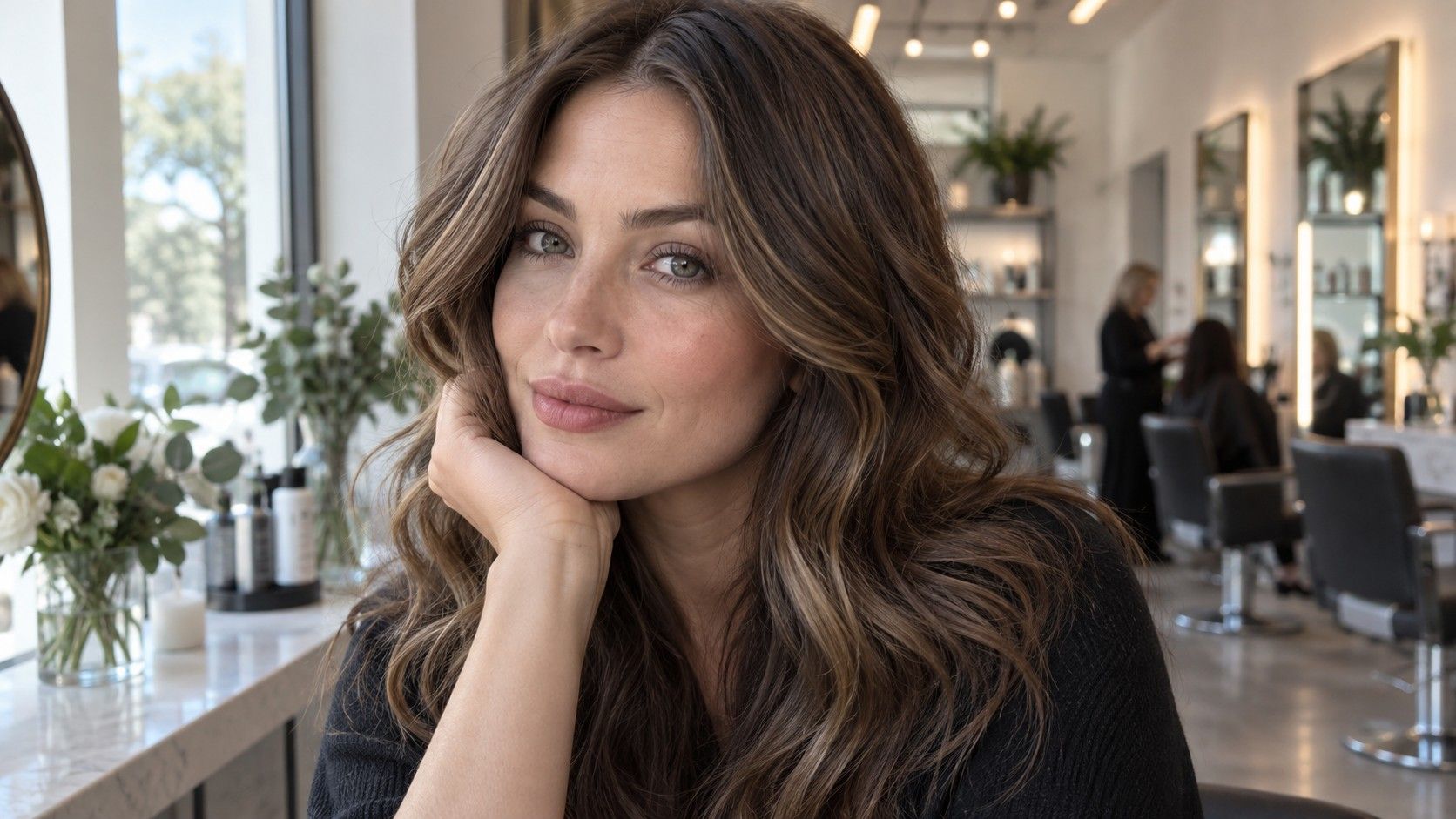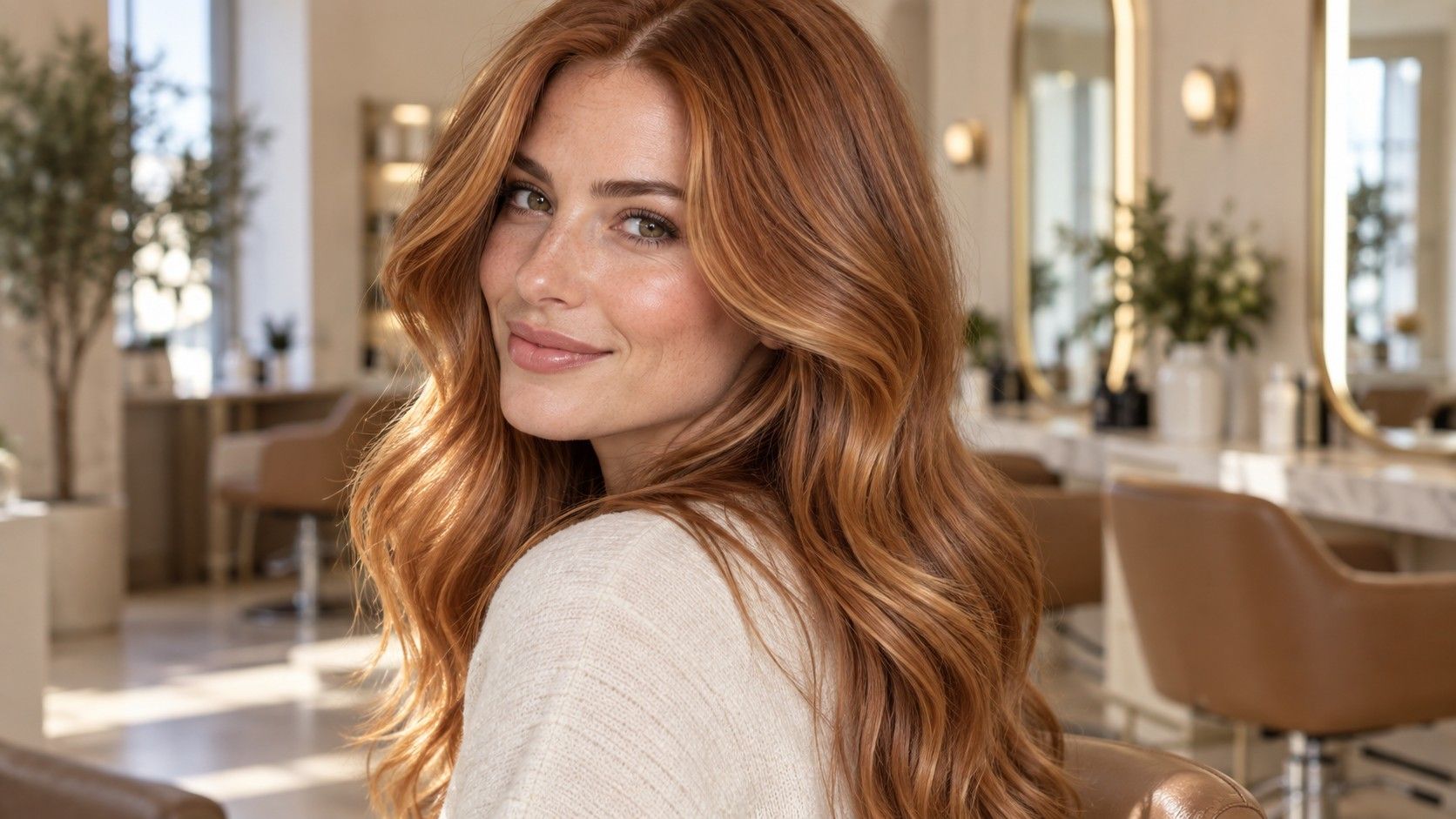
Bright Spring hair colour is less about chasing the loudest blonde or reddest copper and more about keeping a clear, lively relationship between hair, skin, and eyes. Many people in this palette can wear more contrast than they think, yet a colour that is too dark, too ashy, or too neon quickly becomes the first thing anyone sees. The best hair color for Bright Spring should look fresh at conversational distance, with warmth or neutrality that stays clean rather than dusty.
First separate Bright Spring from Warm Spring
Bright and Warm Spring share a need for warmth, but they do not ask for exactly the same finish. Warm Spring often looks best in gentler golden, honey, and apricot shades. Bright Spring usually has more visual contrast: clear eyes, brighter skin, or naturally stronger brows. It can handle a cleaner blonde, a more obvious copper accent, or a medium brown with shine. The common mistake is choosing a soft beige colour simply because it is labelled warm, then wondering why the face looks quieter than usual.
Put two references side by side before your appointment: a creamy, blended honey blonde and a clearer golden blonde with visible light-and-dark pieces. If the blended one feels pretty but vague while the clearer image makes sense with your features, brightness may be your missing ingredient. This does not mean you need high-contrast stripes. It means the colour needs a defined direction rather than a veil of grey-beige toner over everything.
Your natural root is part of that contrast calculation. A medium brown root with bright golden highlights can be striking and believable; the same highlights placed against an artificially dark root shadow may look theatrical. Ask the colourist to compare the proposed root formula with your brow colour and your uncoloured regrowth. That small check avoids a popular salon look that photographs well but feels too severe in daily life.
Use light shades with clarity, not chalkiness
Golden blonde, light honey, clear beige-gold, and a restrained strawberry blonde are reliable Bright Spring hair color ideas when the starting hair can support them. The word to hold onto is clear. A pale blonde that has been toned heavily violet, silver, or smoky may be fashionable, but it often makes bright colouring look disconnected. On the other hand, an uncorrected yellow bleach can overwhelm the face. The target is bright gold with a polished surface, not banana yellow and not grey-white.
A rooted blonde is often more wearable than a full solid lift. Leave a soft version of your natural base at the scalp, brighten the face frame, and keep the interior pieces slightly deeper than the top layer. This gives a clean effect when your hair moves and prevents the scalp from looking exposed in a centre part. It also buys time between appointments; visible regrowth looks intentional when it joins the rest of the colour rather than ending in a blunt horizontal line.
For someone with fine or fragile hair, ask whether a gloss and partial highlights can get you ninety percent of the effect. Repeated bleaching to reach a very light result may cost more in texture than it returns in brightness. A good colour should still look alive after you air-dry it. If it only works after a salon blowout and a heavy smoothing product, the shade or lift level may be asking too much of the hair.
Pick medium brown and copper by the kind of contrast you want
Bright Spring does not have to stay blonde. A clear medium brown with golden caramel reflection can give the face a surprisingly crisp frame, especially when the natural brows are medium to dark. Look for chestnut that leans golden, warm cocoa with light-catching pieces, or a medium brown gloss that is not greyed down. The colour should have a visible shine in shade as well as sun; a brown that only looks warm outdoors may be too flat indoors.
Copper is a strong option if you enjoy noticeable colour, but it needs control. Bright copper can echo clear eyes and warm skin beautifully, while deep burgundy or auburn with blue-violet undertones often feels too heavy. Ask to see a copper sample against a white tissue and a warm cream towel. If it looks alarmingly orange against white but harmonious against cream, it may be exactly the warm clarity you need. If it turns wine-red beside both, it is probably heading away from the palette.
Consider a copper gloss over a warm brown base before choosing a permanent red. It gives the hair movement and lets you see how your brows, wardrobe, and makeup react to the change. Copper fades, especially with frequent washing, hot tools, and swimming. That is not a reason to avoid it; it is a reason to plan a refresh before the colour turns porous and dull rather than expecting one appointment to carry you through an entire season.
| Colour direction | Best use | Specific salon check |
|---|---|---|
| Clear golden blonde | When you want a visibly lighter, energetic finish | Keep warmth after toning; avoid silver ends |
| Strawberry blonde | For a soft copper note on a light base | Make sure blonde remains the dominant read |
| Golden medium brown | For contrast with easier maintenance | Check that the gloss is not mushroom or ash brown |
| Bright copper | For a more noticeable change with clear warmth | Agree on the fade and refresh plan in advance |
Know the difference between unwanted brass and natural warmth
Brassiness has become a catch-all word, and that can be unhelpful for Bright Spring. A clean golden tone is not automatically brass. The problem usually appears when the lift is uneven, when old highlights are more yellow than the new ones, or when the hair has become porous and the ends grab pigment differently. In those cases, a targeted toner, trim, or gloss is sensible. Removing every trace of warmth is not the same as fixing the problem.
At the consultation, ask where the stylist sees the unwanted warmth and where they see the warmth that should stay. That question is more precise than asking for no brass. A good answer might be: cool the orange band behind the ear, soften the yellow on the most porous ends, but leave gold around the face. You are looking for a colourist who can describe placement and condition, not one who reaches automatically for an ash formula.
Home care also changes the result. Purple shampoo can be useful once in a while for a blonde that is becoming overly yellow, but regular use may make a clear gold look cloudy. Use it only where it solves a visible issue, and follow with enough conditioner to keep the ends reflective. A warm gloss appointment every few weeks can be more flattering than repeatedly trying to neutralise the hair at home.
Balance eyebrows and makeup before judging the new colour
Hair colour is read together with the brows, whether we mean to do that or not. A bright golden blonde beside very dark, cool brows may create a contrast that feels sharper than the hair itself. You may only need a warm-toned brow gel or a slightly lighter pencil through the front of the brows. Conversely, do not erase the brows completely for a lighter shade: Bright Spring generally benefits from some definition around the eyes.
Test your usual lipstick and top colours in the week after the salon visit. A coral, clear pink, warm red, or ivory neckline can reveal whether the hair has landed in the right place. If every familiar colour suddenly seems too bright, the hair may be too muted or too dark. If the hair seems to shout over all of them, it may have too much saturation. Judge it in daylight and in the slightly unforgiving light of a lift or office bathroom, not only in the salon mirror.
Give the stylist language that makes the decision concrete
Bring photos, but annotate them for yourself before you sit down. One image may show the level you like, another the root softness, and a third the amount of copper. Tell the stylist what you do not want as clearly as what you do: no smoky beige, no wine-red, no strong dark shadow at the root, or no solid one-tone blonde. This is far more useful than showing six images and saying you like all of them.
Also state the practical limits. Say how often you are prepared to return, whether you use heat daily, and whether you need grey coverage. If you can only visit every ten to twelve weeks, a bright face frame plus a glossy medium base may be a better choice than an all-over lifted blonde. If you enjoy regular refreshes, a clearer blonde or copper can be worth the upkeep. The right Bright Spring shade is not simply the prettiest swatch; it is the one whose saturation, root line, and fading pattern fit your actual routine.
When the colour is right, people tend to notice your eyes before they notice the formula. That is a modest test, but a useful one. Clear colour should make the whole face look present, not turn the appointment into a permanent battle against regrowth, toner, and a shade that only works in one kind of light.