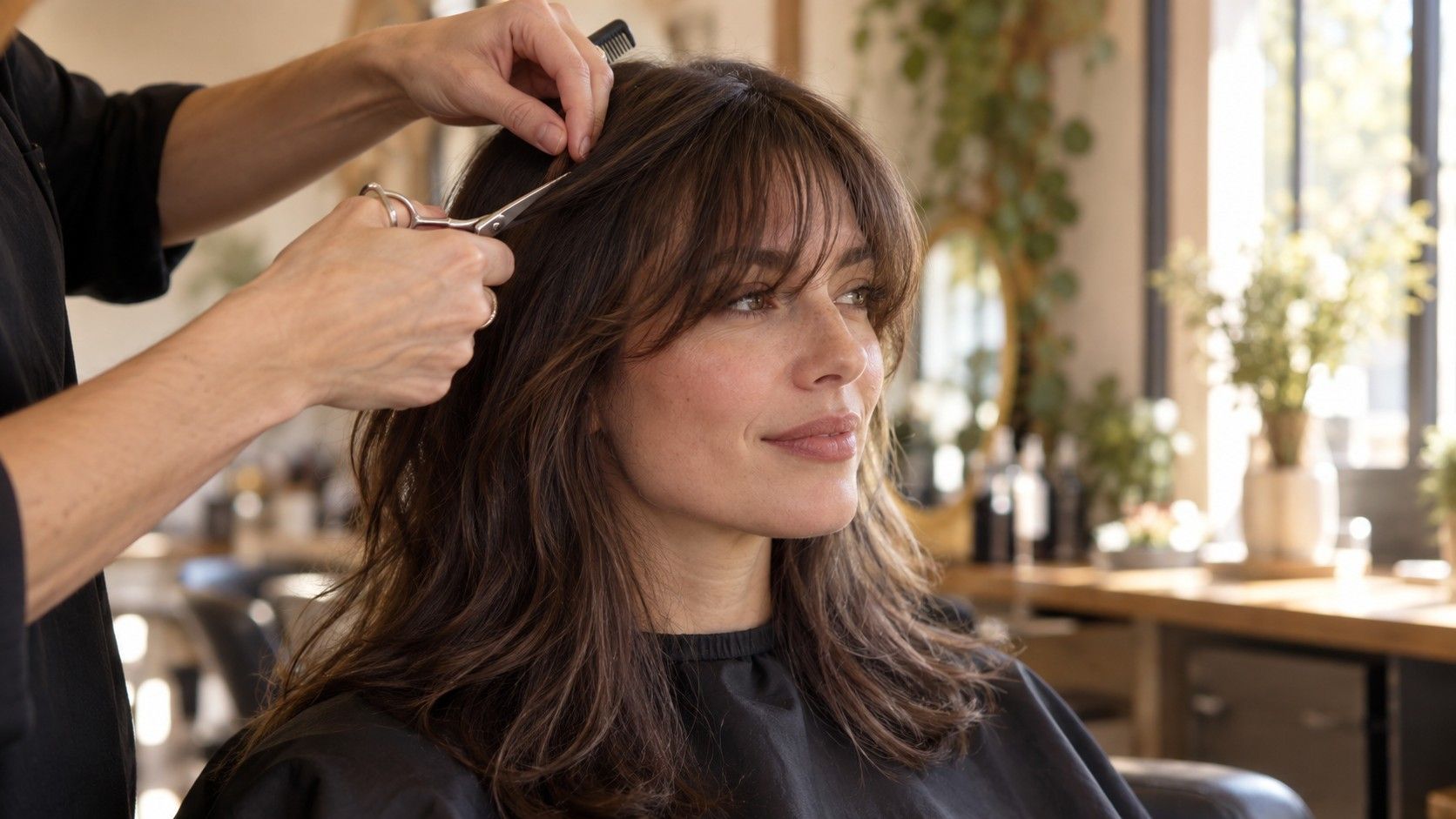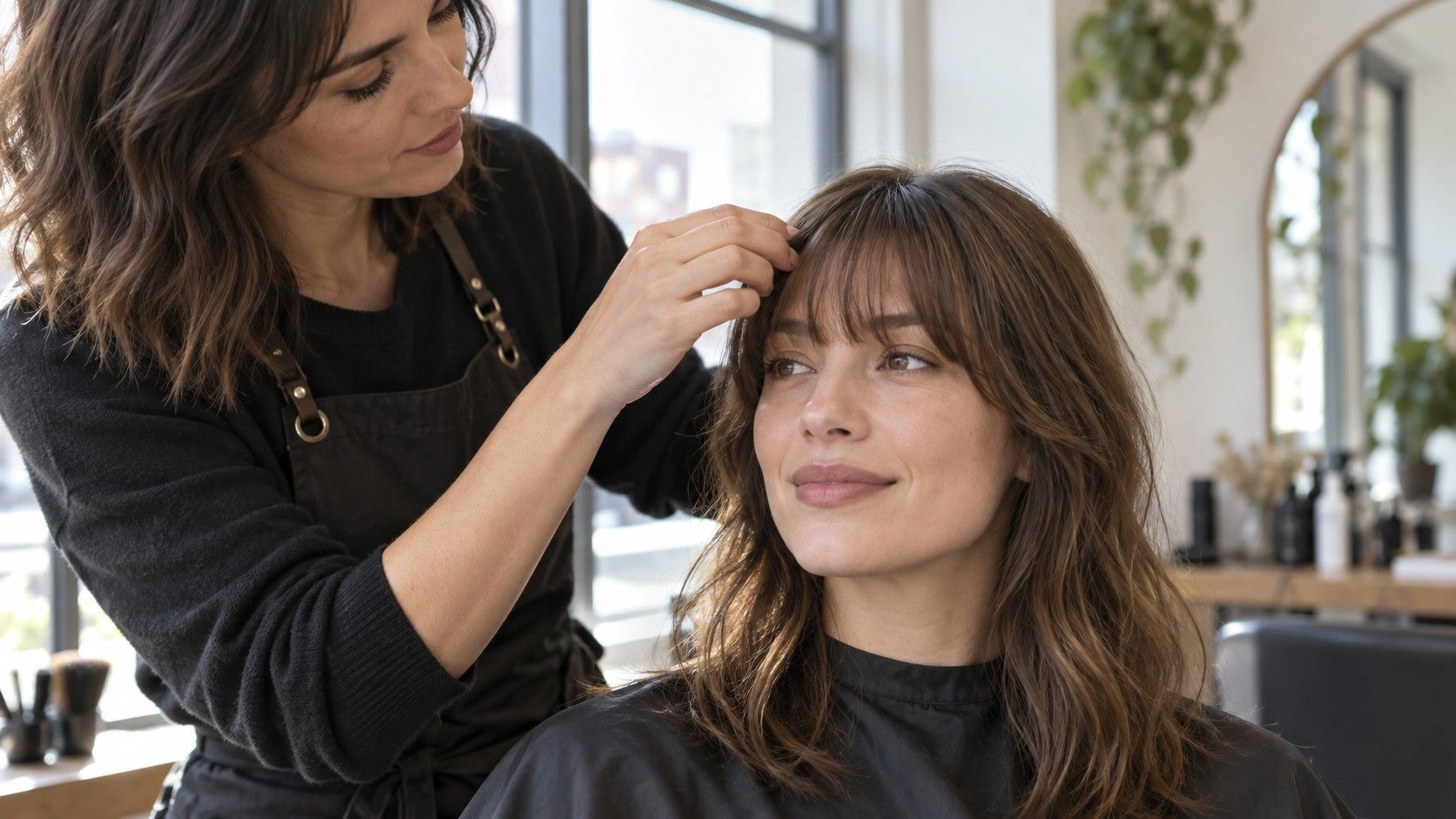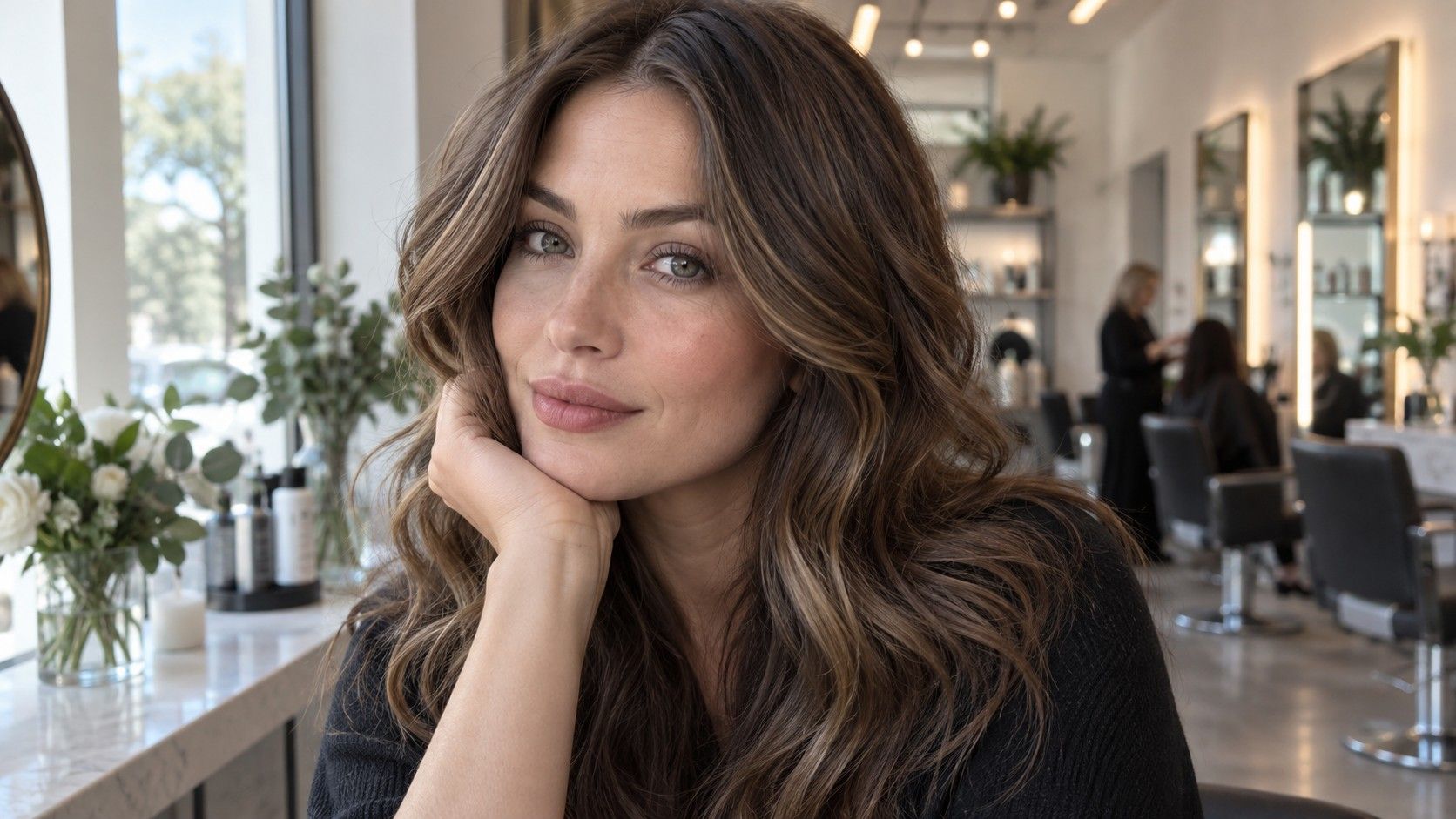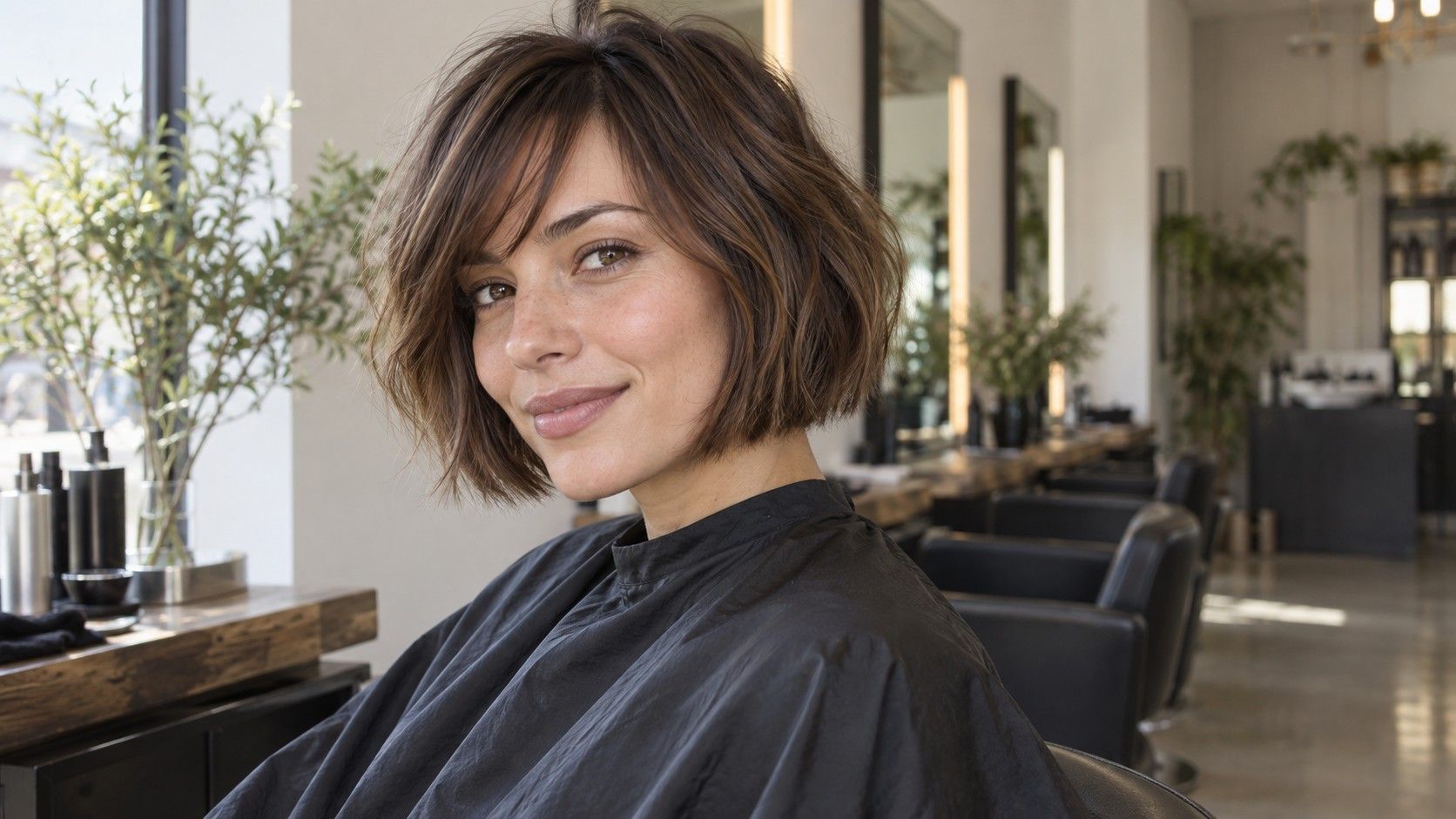
The best haircut for an oblong face is less about hiding a face shape and more about deciding where you want the eye to pause. Oblong faces often look longer than they are because the forehead, cheek area, and jaw read as one vertical line. A haircut can interrupt that line with width near the cheeks, a fringe, texture at the jaw, or simply a part that does not expose the whole centre of the face. The useful choice is the one that works with your hair density and routine, not the one that wins a face-shape infographic.
First check whether “oblong” is the problem you are actually seeing
People use oblong, oval, rectangular, and even square face interchangeably online, but the haircut decisions are not identical. An oblong face generally has noticeable length through the forehead-to-chin line with fairly even width. A square face has a stronger jaw and forehead width; an oval face may be longer but has a softer taper. Stand a few feet from a window, pull your hair back, and take one straight-on photo without the wide-angle front camera. The camera held too close can lengthen the centre of the face on its own.
Then look at the features that are doing the visual work. A high forehead, a long chin, low cheek volume, or very flat hair at the sides can make almost any face seem longer. That is good news, because you are not limited to one “approved” cut. If the issue is flat roots and hair tucked behind both ears, a cut with width at the cheekbone may help more than a dramatic fringe. If the forehead feels exposed, bangs may be the direct solution.
Choose length by where it creates width
A bob that ends somewhere between the jaw and collarbone is often useful because it places hair beside the face rather than trailing down it. The exact stopping point matters. A blunt chin-length bob can make a strong jaw feel more graphic; a slightly longer, textured bob can soften that effect and is often easier to wear. If your neck is short or you hate hair touching your cheeks, a collarbone lob with soft internal movement gives a similar horizontal balance without feeling boxed in.
Long hair is not forbidden for an oblong face. The problem is usually long, flat, centre-parted hair with no change between cheekbone and ends. Add a face frame beginning around the cheek or lip, keep enough fullness through the lower half, and avoid cutting every layer at the crown. Very high volume can lengthen the silhouette further. A long cut looks most balanced when the movement travels outward as well as downward.
| Haircut direction | Why it can balance an oblong face | Watch out for |
|---|---|---|
| Jaw to collarbone bob | Puts visual weight beside the cheeks and jaw | Choose the endpoint carefully if your jaw is pronounced |
| Long bob with soft layers | Adds width without committing to a short cut | Too many short crown layers can create height instead |
| Long hair with a face frame | Breaks up a long vertical line while keeping length | Flat ends and a severe centre part can undo the effect |
| Curly or textured crop | Natural side volume can make the face appear broader | Ask how the shape will shrink when dry |
| Fringe with medium length | Interrupts forehead height and redirects attention to the eyes | It needs a realistic plan for cowlicks and daily styling |
Bobs, layers, and texture solve different problems
A bob is a perimeter decision: it changes where the bulk of your hair sits. Layers are a movement decision: they change how hair separates and bends. Texture is a finishing decision: it prevents a deliberately shaped cut from looking like a helmet. Mixing these up produces a common consultation problem. Someone asks for “layers for an oblong face” and leaves with short pieces at the crown, even though what they wanted was gentle fullness beside the jaw.
For fine hair, a mostly blunt lob with a few concealed layers may look fuller than a heavily layered style. For thick hair, removing some internal weight can stop a bob expanding into a triangle at the ends. Natural waves need a dry-hair conversation; a layer that looks perfect while wet may spring to the cheek when dry. Take a photo of your hair air dried, not only styled. It gives the stylist a better starting point than a celebrity reference with completely different density.
When bangs help, and when they create another daily task
Bangs can be effective because they shorten the visible forehead area, but their usefulness depends on texture and tolerance for maintenance. A soft curtain fringe is forgiving with a centre or off-centre part and can blend away on days you do not want it in your face. A fuller straight fringe creates a stronger horizontal line and can make the eyes the focus, but it asks for more frequent trims and usually some morning styling.
Do not choose bangs solely because a chart says oblong faces need them. A strong cowlick, oily fringe area, glasses that already frame your eyes, or a commute in humid weather can change the calculation. At the appointment, have the stylist pin back a test section around the proposed length and take a normal phone photo. Ask where the fringe will fall after it dries. A fringe that brushes the eyelashes in the chair may lift above the brows at home, which is a very different look.
Use the part and volume you already know how to make
A slight side part can add asymmetry and width near one cheek, particularly on straight hair that otherwise falls in two vertical curtains. It does not need to be a deep 2000s side part. Moving the part a centimetre or two can be enough. A centre part can work beautifully too, especially with curtain bangs or face-framing layers, but it asks the hair on both sides to have some lift rather than hanging tight against the temples.
Place volume beside the face, not only above it. A round brush at the crown creates height, which can be elegant but may emphasise length if the sides stay sleek. Try drying the first few inches around the cheekbones outward, using a roller or a large brush, then let the rest remain simpler. This small styling change is a useful experiment before a haircut. If you love the wider silhouette, tell the stylist that is the effect you want the cut to support.
Bring your own photos to the haircut consultation
Reference photos work best as evidence of specific details. Save one picture for the perimeter length, one for the fringe or face frame, and one for texture. Say what you want from each. “I like the width around her cheekbones, but not the short layers” is far more helpful than showing six contradictory cuts. Include a current photo of your hair from the front, side, and back in daylight. The side view often reveals whether the issue is forehead height, a flat crown, or the way the ends pull the silhouette down.
Talk about behaviour, not just shape. Do you wear your hair in a ponytail for work? Do you air dry? Do you use a curling iron once a month or every morning? A stylish jaw-length bob is a poor recommendation if you need to tie it back daily and dislike clips. A good stylist can adapt a haircut oblong face women request to these conditions: leave the front slightly longer, retain enough perimeter, or choose a fringe that can be swept aside.
Do not let a square-face rule decide an oblong-face haircut
The keyword best haircut for square face often appears beside oblong-face advice, but the overlap has limits. Both face shapes may benefit from softness around a strong jaw, and both can look good with texture. Square faces may want less emphasis exactly at a broad jaw; oblong faces often benefit from some width near that same area. A blunt jaw-length cut that feels confident on one person may exaggerate the geometry another person wants to soften.
Use the rules as questions, not verdicts. Does this cut add width where you want it? Will its shortest point highlight a feature you enjoy? Can you recreate the finish with your own tools? If the answers are yes, the label matters much less. Haircuts are seen in motion, in weather, and in ordinary lighting. The most balanced result is usually the one that still looks intentional after you have slept on it, tucked one side behind your ear, and gone through a full day.